
Stainless Steel Bar Guide: Grades, Shapes, Standards and Tolerances
A buyer-focused guide to stainless steel bar grades, round, hex, square and flat shapes, ASTM standards, tolerances, MTC traceability and RFQ details.
In This Guide
- Quick answer: what defines a stainless steel bar order?
- Choose the bar shape from the finished part
- Shortlist the grade without treating grades as interchangeable
- Put the correct standard on the purchase order
- Match the production route to machining allowance and finish
- Treat diameter tolerance, straightness and roughness as separate controls
- Connect the MTC to the physical bundles
- Write one specification line that a supplier can price
- Plan bar length, packing and container type together
- What FX Stainless Steel checks before quotation
- Common quotation mismatches to catch early
- Official references used for this guide
- Send a bar RFQ
Stainless steel bar is not ordered by grade alone. A usable purchase specification connects the material grade to the bar shape, nominal size, production route, tolerance, standard, inspection documents and shipment plan. Missing one of those details can change the product or the price.
This guide is the starting point for buyers sourcing stainless steel round bar, hex bar, square bar, flat bar and precision-finished bar from China. It keeps the broad decisions here and links to separate pages for standards, tolerances, machining and MTC checks.
Quick answer: what defines a stainless steel bar order?
A complete stainless steel bar order identifies eight items: grade, shape, size, process route, tolerance, length, standard and traceability. For example: `316L round bar, 20 mm diameter, cold drawn and polished, h10, 3 m length, ASTM A276, MTC required, 500 kg, FOB China port`. That wording is far more useful than `316L bar` because it gives the supplier a clear product route and quotation basis.
| Order field | What to write | Why it changes the quote |
|---|---|---|
| Grade | 303, 304/304L, 316/316L, 410, 420, 431, 17-4PH or duplex | affects chemistry, corrosion margin, heat treatment, machining and cost |
| Shape | round, hex, square or flat | determines section geometry and starting material for the part |
| Size | diameter, across flats, side size, or thickness x width | prevents different bar forms from being compared as one item |
| Process route | hot rolled, cold drawn, peeled, turned or centerless ground | changes surface, allowance and dimensional control |
| Tolerance | drawing tolerance, h9, h10 or h11 where applicable | affects processing route, inspection and yield |
| Length | random, fixed, cut-to-length or short blanks | affects saw loss, packing and container planning |
| Standard | ASTM A276, A479, A582, EN 10088-3, JIS G4303 or drawing | controls product and certificate wording |
| Traceability | MTC, Heat Number, bundle labels and packing list | connects the certificate to the shipped material |
Choose the bar shape from the finished part
Start with the final geometry. Buying a shape close to the finished component can reduce stock removal, cycle time and scrap, but only when the section dimensions and corner condition fit the drawing.
| Bar form | Size language | Common starting use | Details that matter |
|---|---|---|---|
| Round bar | diameter | shafts, pins, rollers and CNC-turned parts | diameter tolerance, straightness, roundness, surface and cut length |
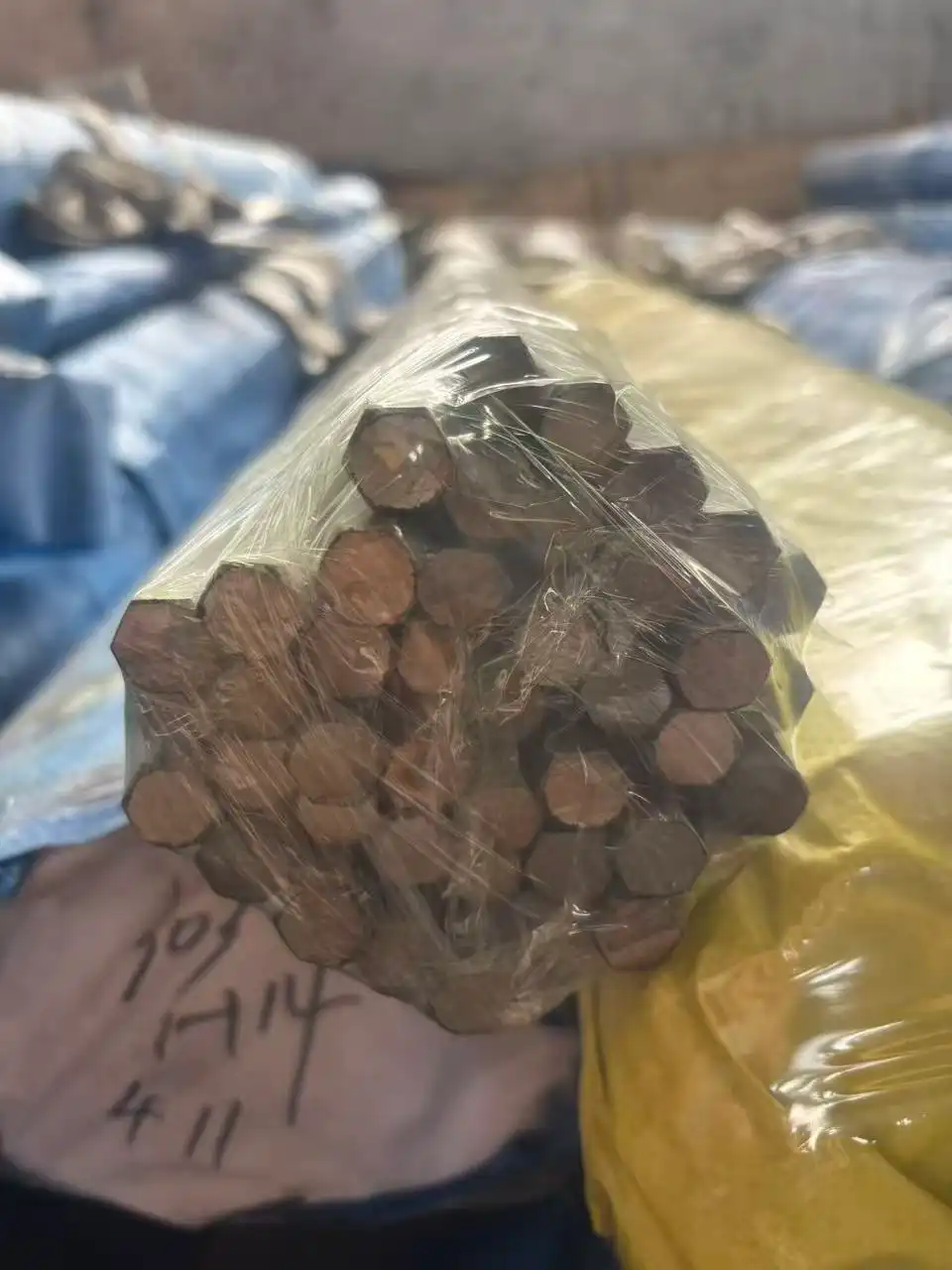
| Hex bar | across flats (AF) | nuts, fittings, couplings and wrench-flat parts | AF tolerance, corner condition, twist and bar feeding |
| Square bar | side x side | blocks, brackets, rails and machined blanks | side tolerance, corner, twist, straightness and surface |
| Flat bar | thickness x width | supports, frames, brackets and rectangular blanks | production route, edge condition, thickness, width and flatness |
Ground and peeled bar are process routes, not additional section shapes. A centerless-ground product is normally round bar finished to tighter diameter and surface requirements. Peeled or turned bar has an outer layer removed to clean up the surface and provide machining stock.
The round vs hex vs square bar guide goes deeper into machining waste and clamping when two starting shapes look possible.
Shortlist the grade without treating grades as interchangeable
The drawing or end-user specification takes priority. When the material is not fixed, use the service environment, machining route, welding and mechanical requirements to narrow the grade family.
| Grade or family | Common reason it enters the shortlist | Important boundary |
|---|---|---|
| 303 | repeat CNC turning and better chip breaking | lower corrosion margin than 304 in many environments; not intended as an automatic 304 substitute |
| 304 / 304L | general industrial parts, food-equipment parts and broad fabrication use | accept 304/304L dual certification only when the actual MTC supports both designations |
| 316 / 316L | chloride-sensitive, coastal, chemical, valve or marine-related parts | molybdenum improves the grade route, but poor design, deposits and crevices can still control corrosion |
| 410 / 420 / 431 | shafts, valve parts, wear parts or components requiring martensitic strength | heat-treatment condition and hardness cannot be omitted |
| 17-4PH / 630 | high-strength shafts and project-controlled components | the delivery condition, such as solution-treated or aged condition, changes the properties |
| 2205 / 2507 duplex | higher-strength and chloride-resistant project parts | grade designation, solution treatment, testing and engineering acceptance need clear project control |
For common commercial routes, continue with the 303 stainless steel bar, 304/304L stainless steel bar, 316/316L stainless steel bar or duplex stainless steel bar page. These pages cover the grade-specific chemistry and supply boundaries that do not belong in a general guide.
Put the correct standard on the purchase order
Standards are not decorative certificate language. They define scope, ordering rules and test requirements. The exact specification named by the drawing or end user belongs on the PO and MTC.
| Standard | Where buyers commonly encounter it | Purchasing note |
|---|---|---|
| ASTM A276/A276M | general stainless steel bars and shapes | common starting wording for round, square and hex bar orders |
| ASTM A484/A484M | general requirements for stainless steel bars, billets and forgings | works with a product specification; do not use it as the grade name |
| ASTM A582/A582M | free-machining stainless steel bars | often relevant to grades such as 303 or 416 when the order calls for this route |
| ASTM A479/A479M | stainless steel bars and shapes for boilers and other pressure-vessel-related use | confirm whether the project requires A479 rather than general A276 wording |
| ASME SA-479/SA-479M | ASME-adopted pressure-related material specification | use it when the ASME-controlled project documents name it |
| EN 10088-3 | European stainless semi-finished products, bars, rods, wire, sections and bright products | state the EN material number and delivery condition required by the order |
| JIS G4303 | stainless steel bars under JIS wording | pair the SUS grade designation with the named JIS standard |
`304`, `SUS304`, `UNS S30400` and `EN 1.4301` are not a complete purchase specification by themselves. They identify grade systems, while the product standard and delivery requirements define the bar order. Use the grade equivalent lookup for naming, then put the drawing-required standard on the PO.
For pressure-related wording, read ASTM A276 vs ASTM A479 vs ASME SA-479 before approving the certificate format.
Match the production route to machining allowance and finish
Two bars can carry the same grade and diameter but follow different production routes. The route affects surface condition, dimensional consistency, available size and machining allowance.
| Supply route | Typical purchasing reason | What to specify separately |
|---|---|---|
| Hot rolled / black bar | larger sizes, forging or substantial downstream machining | scale condition, diameter allowance, straightness and defect-removal plan |
| Cold drawn / bright bar | steadier dimensions and cleaner surface for routine machining | actual tolerance, straightness, surface condition and residual machining allowance |
| Peeled / turned bar | removal of the outer layer before machining | finished diameter, remaining defects, straightness and allowance |
| Turned and polished | improved round-bar surface after turning | diameter tolerance, polish expectation and protection |
| Centerless ground | tight diameter control and smoother surface for shafts or collet-fed CNC work | h class or drawing tolerance, roughness, roundness and straightness |
A bright bar is not automatically h9, and a polished bar is not automatically centerless ground. Write the process route and the measurable requirement. Our cold-drawn bar production guide shows where drawing, straightening and inspection enter the route. For precision shafts, continue to the centerless-ground bar guide.
Treat diameter tolerance, straightness and roughness as separate controls
`h9`, `h10` and `h11` are shaft tolerance classes used with a nominal size range. They define upper and lower size deviations; they do not automatically set straightness, roundness or surface roughness.
A machining buyer may need all four controls:
- diameter or AF tolerance: whether the section fits the drawing or collet
- straightness: whether the bar feeds without excessive runout or vibration
- roundness: whether the cross-section stays within the required geometry
- surface roughness: whether the finished surface meets the machining or sealing need
Do not write `h9 bar` without a nominal diameter. The permitted deviation changes with the diameter range. Use the h9, h10 and h11 tolerance guide or the bar tolerance lookup, then place the final tolerance on the drawing or PO.
Connect the MTC to the physical bundles
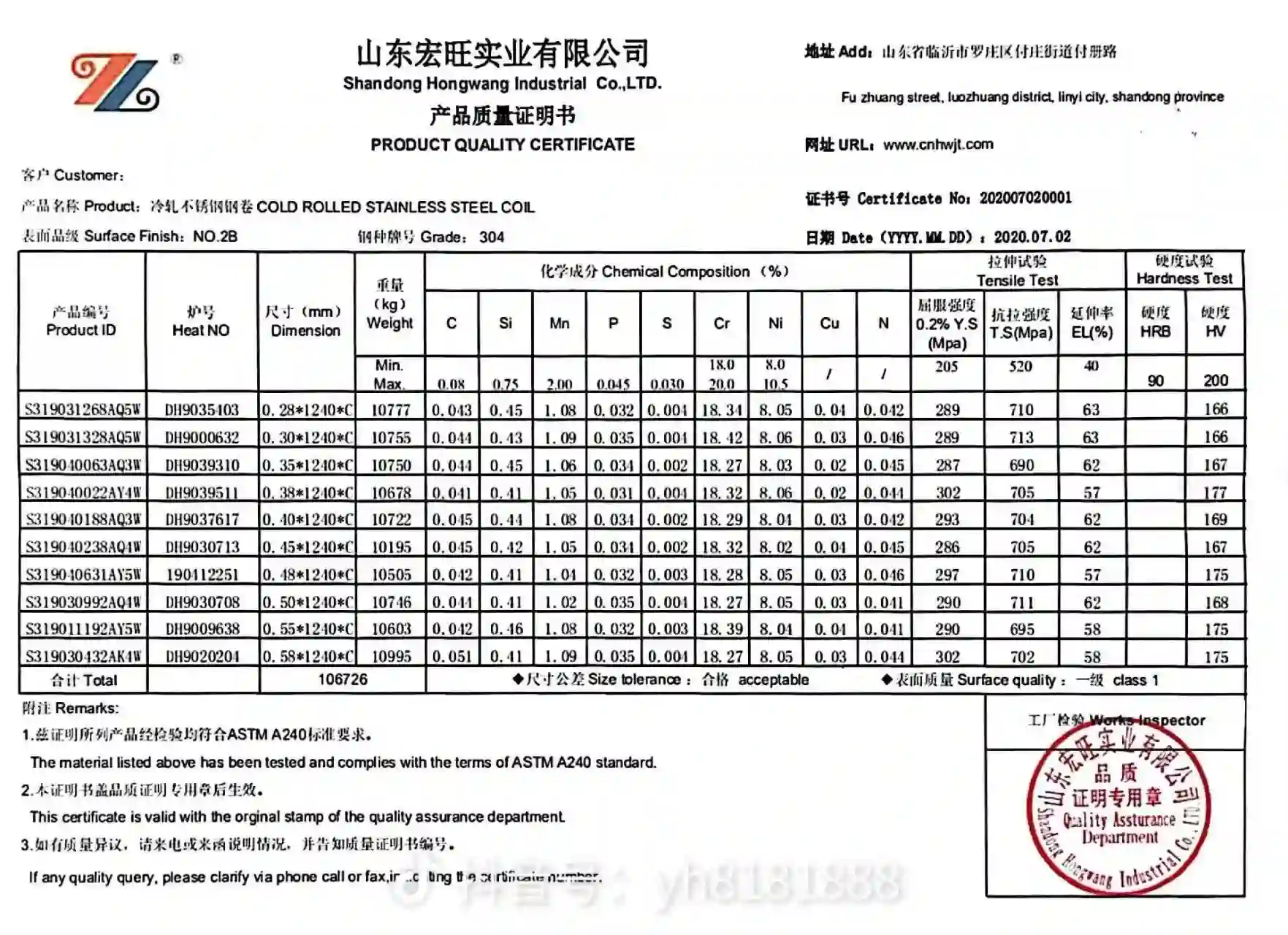
The MTC establishes the heat chemistry and reported test results, but traceability is only intact when the document matches the cargo. Before release, compare four places:
1. The grade and standard on the PO against the MTC. 2. The Heat Number and chemistry on the MTC against the ordered grade. 3. The Heat Number on each bundle label or material marking against the MTC. 4. The bundle count, size and Heat Number on the packing list against the loaded material.
A certificate marked 316L does not settle the question if the molybdenum result or Heat Number does not fit the order. Stop release and ask for corrected documents, label photographs or PMI evidence when the traceability chain breaks. The MTC shipment-release checklist covers that decision in detail.
Write one specification line that a supplier can price
A concise RFQ can still be complete. These examples show how the wording changes with the product route.
General round bar
304 stainless steel round bar, ASTM A276, 25 mm diameter, cold drawn bright finish, h11, 3 m fixed length, MTC required, 1 MT, FOB China port.
Hex bar for repeat machining
303 stainless steel hex bar, ASTM A582, 19 mm AF, cold drawn, straightness requirement per drawing, 3 m length, Heat Number labels required, 500 kg, destination Laem Chabang, Thailand.
Ground shaft stock
316L centerless-ground round bar, 12 mm h9, surface roughness Ra 0.8 µm max, straightness 0.5 mm/m max, 2 m cut length, MTC and packing photos required, 300 kg, destination Jebel Ali, UAE.
The numbers in the third example are buyer-specified RFQ fields, not default tolerances for every ground bar. Replace them with the drawing values for the actual part.
Plan bar length, packing and container type together
Bar length affects both machining yield and export logistics. A standard 20ft container has an internal length below 6 meters, so straight 6 m bars do not fit through the normal loading route. Confirm a shorter cut length, a 40ft container or another agreed shipping plan before the supplier finishes packing.
For sea freight to Southeast Asia or the Middle East, the packing list needs more than gross weight. Keep these details visible:
- bundle number, grade, Heat Number, size and length
- net and gross weight by bundle
- waterproof wrapping and end or corner protection suited to the bar shape
- labels that remain readable after handling
- separation between grades or heats in a mixed shipment
- lifting and container-loading method for full-length bars
A 3 m trial lot for Laem Chabang or Cat Lai follows a different packing and container plan from 6 m project bars for Jebel Ali. Set the length and destination before comparing freight assumptions.
What FX Stainless Steel checks before quotation
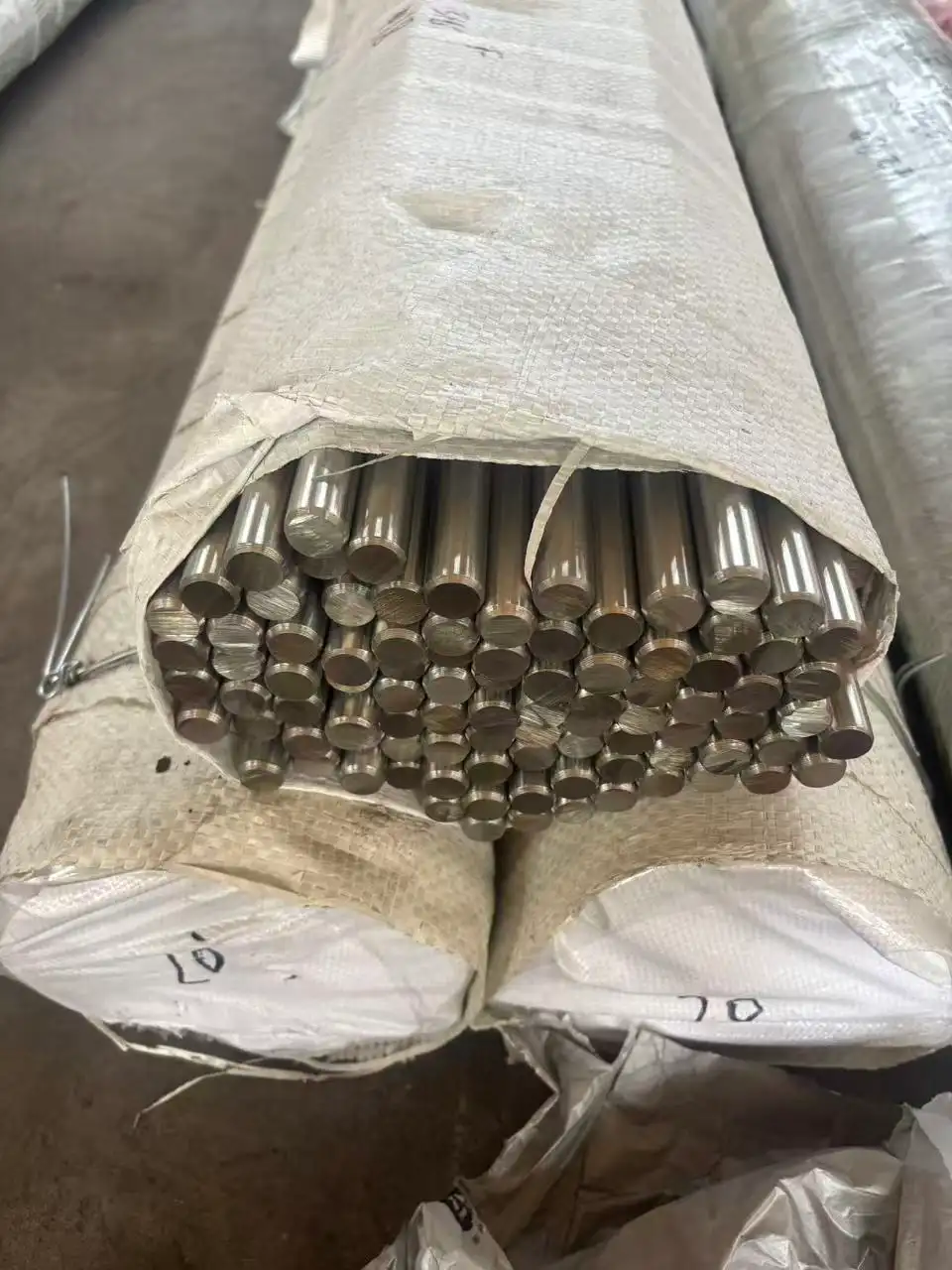
Our stainless steel bar range covers round, hex, square, flat, cold-drawn, peeled and centerless-ground supply routes. The `1,000+ tons` figure refers to overall bar inventory across grades, shapes and sizes. It does not mean that every diameter or grade has the same stock depth.
Selected stock sizes can support an `MOQ of 100 kg`. Custom rolling, tight tolerances, special heat-treatment conditions, cutting and project-controlled testing may require a different minimum quantity. We confirm the applicable route from the exact RFQ rather than extending one MOQ to the full catalogue.
Before quoting, we look for:
- a grade and standard that agree with the drawing
- the correct size language for round, hex, square or flat bar
- a finish and tolerance that fit the machining plan
- MTC, Heat Number, PMI or third-party inspection wording required by the order
- fixed length, cutting tolerance and bundle plan
- destination, Incoterm and container constraints
This is also why a warehouse photograph is supporting evidence, not proof of a particular heat. Final stock availability comes from the requested grade, size, surface and current batch records.
Common quotation mismatches to catch early
Most bar disputes start with an incomplete comparison rather than one obviously wrong number. Check these points before choosing the lowest unit price:
- one quotation is hot rolled while another is cold drawn or ground
- one supplier quotes random length while another includes fixed-length cutting
- `20 mm` means diameter in one RFQ and across flats in another
- h9 appears without a nominal size range or separate straightness requirement
- ASTM A276 and ASTM A479 / ASME SA-479 are treated as interchangeable wording
- dual certification is accepted without checking the actual MTC
- net material weight is compared with a price that includes cutting, packing or testing
- 6 m bars are assigned to a standard 20ft container without a workable loading plan
Official references used for this guide
This page summarizes buyer-side ordering logic and does not replace the current edition of a standard. The main references are:
- ASTM A276/A276M stainless steel bars and shapes
- ASTM A484/A484M general requirements for stainless steel bars, billets and forgings
- ASTM A479/A479M stainless steel bars and shapes for boilers and pressure vessels
- ASTM A582/A582M free-machining stainless steel bars
- ISO 286-2 limits and fits
- EN 10088-3 stainless steel bars, rods, wire, sections and bright products
Use the edition and supplementary requirements named by the buyer, drawing, purchase order or end-user specification.
Conclusion
A reliable stainless steel bar quote begins with the full product definition, not a long grade list. Fix the grade and standard, choose the shape from the finished part, match the production route to the tolerance, and connect the MTC to the bundle labels. Then settle length, packing and destination before comparing freight.
The stainless steel bar range is the next step for product forms and grade routes. Buyers with a ready drawing can send the specification through the bar quotation page.
Frequently asked questions
Q. What information is needed to order stainless steel bar?
A. State the grade, shape, nominal size, tolerance, process or surface route, length, quantity, standard, MTC requirement and destination. For hex bar use across-flats size; for flat bar use thickness x width. Add straightness, roughness, hardness or cut-length tolerance when the drawing controls them.
Q. Which stainless steel bar grade is best for machining?
A. 303 is a common starting point when chip control and machining rate matter, while 304 or 316L may be needed when corrosion or project wording takes priority. No grade is best for every part. The drawing, environment, welding, strength and document requirements decide the final choice.
Q. Does h9 tolerance also control straightness and surface finish?
A. No. An h9 designation controls the permitted shaft-size deviation for a stated nominal diameter and size range. Straightness, roundness and surface roughness are separate requirements and need their own values or acceptance wording on the drawing or purchase order.
Q. What is the difference between ASTM A276 and ASTM A479 bar?
A. ASTM A276 is widely used for stainless steel bars and shapes in general applications. ASTM A479 covers stainless steel bars and shapes for boilers and other pressure-vessel-related use. ASME SA-479 is the ASME-adopted specification used in ASME-controlled work. Use the exact wording required by the drawing and project documents.
Q. Can I order 100 kg of stainless steel bar?
A. Yes, selected stock sizes can support a 100 kg trial order. Availability depends on the grade, shape, size, surface, cutting plan and current stock. The 1,000+ ton stock figure refers to our overall stainless steel bar inventory, not every individual grade and dimension.
Q. Can 6 meter stainless steel bars load in a standard 20ft container?
A. Not as straight 6 meter lengths through the normal loading route. A standard 20ft container has an internal length below 6 meters, so buyers need a shorter cut length, a 40ft container or another agreed shipping plan. Confirm the final length before fixing the container type and packing.
Send a bar RFQ
Send the grade, shape, nominal size, tolerance, process route, length, quantity, standard, MTC requirement and destination through our stainless steel bar quote page. We will confirm the applicable stock or production route, cutting plan, document requirements and export packing before quotation.