
303 Stainless Steel Round Bar
Order 303 stainless steel rod by diameter for pins, shafts, bushes and other turned components.
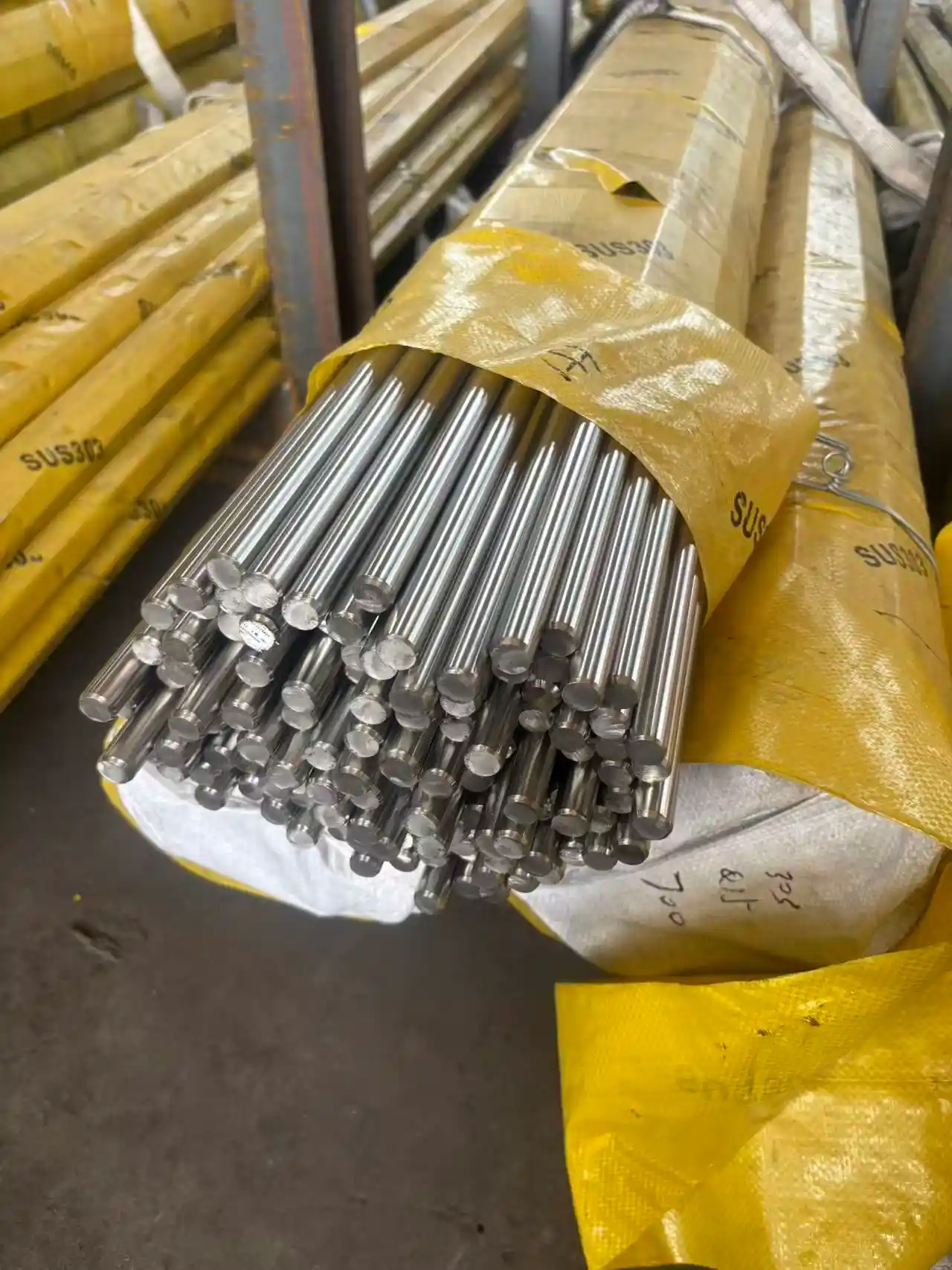
FX Stainless Steel supplies 303 stainless steel round and hex bar for machine shops, fastener makers and industrial distributors. Send your size list, finish and required lengths so we can check available stock and MTCs. We support trial orders and mixed-size shipments for buyers in Southeast Asia and other export markets.
Free-machining grade
Common bar forms
Specify on the order
By size and agreed finish
303 is a free-machining austenitic stainless steel used for turned parts, screw-machine components, nuts and connectors. Sulfur promotes manganese sulfide (MnS) inclusions that help chips break during cutting. It generally machines more easily than 304, but offers less corrosion resistance and is a poor choice for parts that need welding. Select it when machining is the priority and the service conditions suit the grade.
| Item | 303 Bar Supply | What to State in the RFQ |
|---|---|---|
| Grade and standard | 303 / UNS S30300; SUS303 when specified | Name ASTM A582, JIS G4303 or the required product standard and edition. Match the MTC to that wording. |
| Forms | Round and hex bar; square bar on inquiry | Round uses diameter. Hex uses across-flats (AF or S) size. Square uses side size. |
| Size range | Round 3-120 mm; hex S5-S60 mm | These are inquiry ranges. Availability depends on the size, quantity and finishing route. |
| Surface and processing | Cold drawn, bright, centerless ground or polished | State the supplied condition. A bright appearance alone does not establish a tolerance class. |
| Dimensional tolerance | h9, h10, h11 or explicit drawing limits | Identify the controlled dimension. Specify straightness, roundness and roughness separately when needed. |
| Length | 3 m fixed-length requests and cut-to-length orders | Give the length tolerance and end condition. Confirm availability and cutting allowance for each size. |
| Quantity | Trial orders from 100kg for selected stock items; mixed-size inquiries | List kilograms or pieces per size. A total order weight alone is not enough to check stock or MOQ. |
| Documents and packing | MTC, heat-number identification and export packing | Add dimensional records, PMI or third-party inspection when required. Agree the scope before quotation. |
Put each diameter or AF size on a separate line with its weight or piece count. We can then identify which items are available and which need finishing or production before agreeing a shipment date.
A 3 m requirement on one line should not be assumed for the entire list. Include length tolerance and any deburring or chamfer request. Kilogram quantities may need an agreed weight allowance when supplied as whole bars.
For a mixed 303, 304 and 316 order, agree bundle labels showing grade, size, length and heat number. Keep the packing list and MTC references aligned so the receiving team can identify each batch.
These common 303 / UNS S30300 limits provide a starting point for checking heat chemistry. They are specification limits, not measured values for our stock. Final acceptance follows the ordered standard, edition and batch MTC.
| Element | Common 303 Limit, Mass % | Purchasing Significance |
|---|---|---|
| Carbon (C) | Max 0.15% | Check the actual result against the ordered 303 specification; this is not an L-grade designation. |
| Manganese (Mn) | Max 2.00% | Combines with sulfur in MnS inclusions associated with chip breaking. |
| Phosphorus (P) | Max 0.20% | The result must meet the permitted limit for the grade and standard. |
| Sulfur (S) | Min 0.15% | Central to 303 machinability, but sulfur content alone does not predict tool life. |
| Silicon (Si) | Max 1.00% | Include it in the chemistry check rather than checking only chromium and nickel. |
| Chromium (Cr) | 17.0% - 19.0% | Helps establish that the heat falls within the ordered 303 chemistry range. |
| Nickel (Ni) | 8.0% - 10.0% | Check alongside the other elements to confirm the heat's composition. |
A chemistry table does not certify another standard or prove diameter tolerance. Request the required certificate wording and dimensional evidence separately.
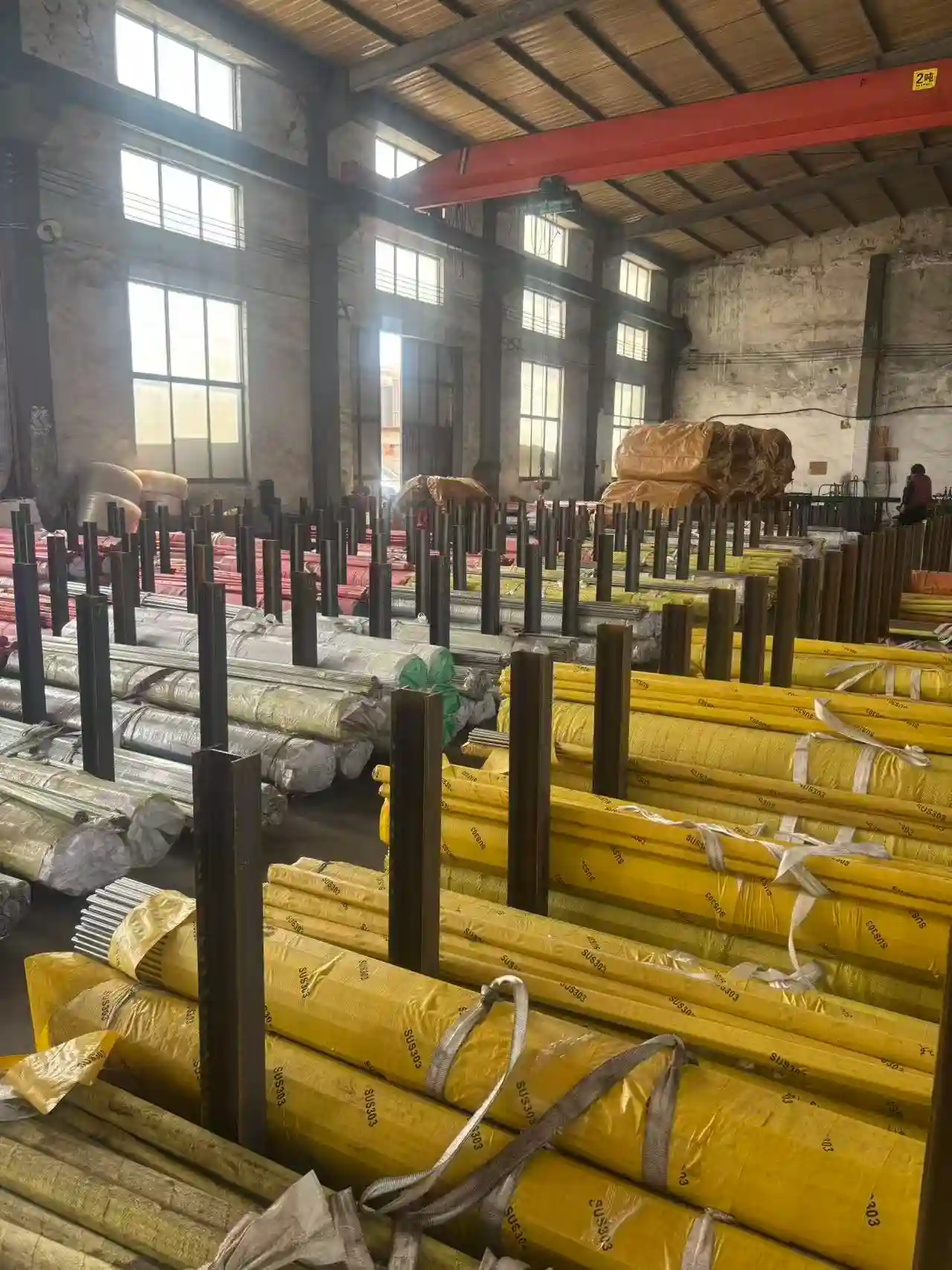
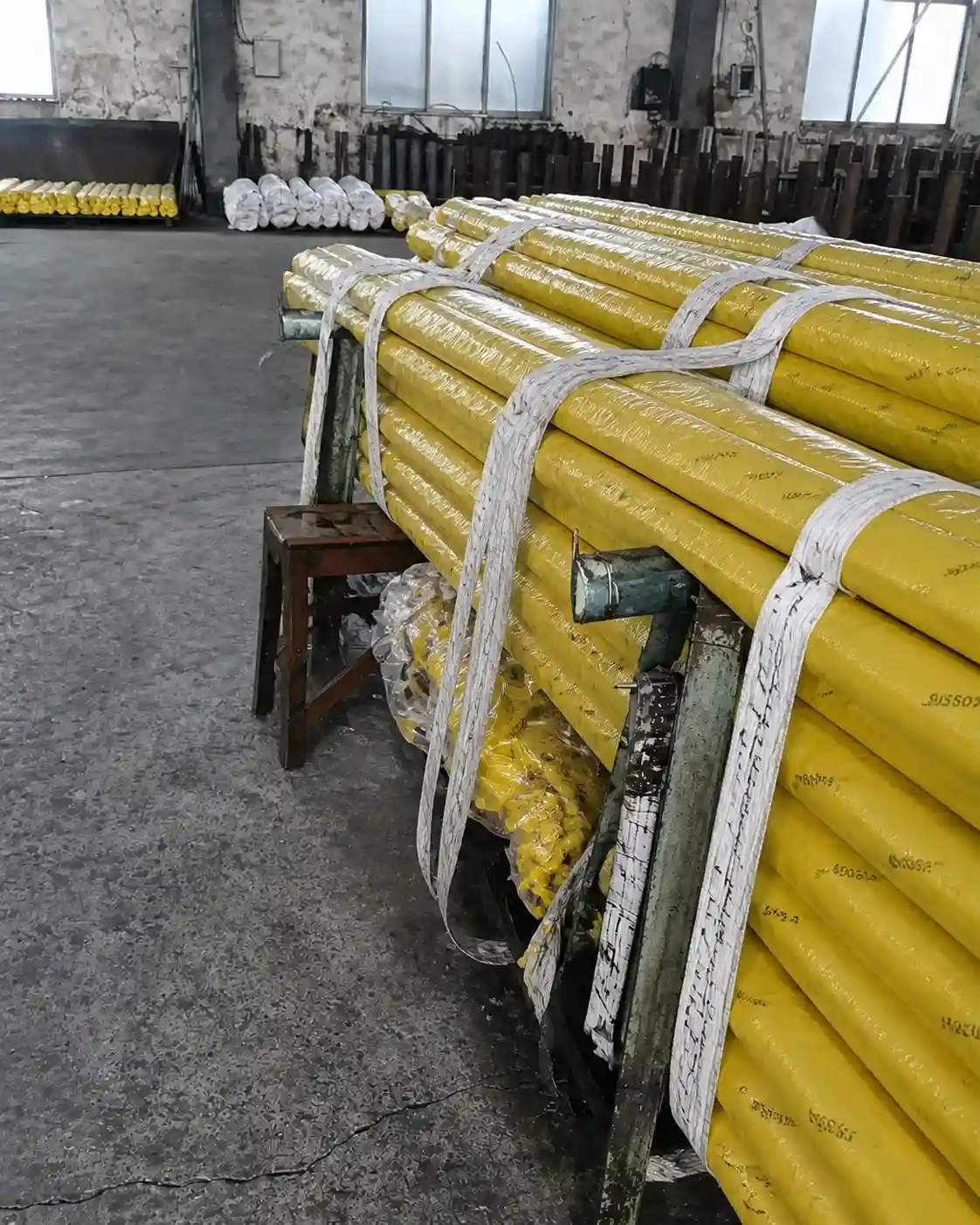
Our packing photo shows wrapped bar bundles held with straps in the workshop. It records a packing stage; grade markings and wrapping alone cannot prove chemistry or dimensional compliance. For your order, agree which labels, documents and measurements must be supplied before release.
The MTC, bundle identification and packing list should refer to the same batch, including when several sizes travel together.
State sampling and measurement requirements for critical sizes. An MTC does not by itself show that every bar meets h9 or a specified straightness limit.
For repeat CNC work, test the agreed finish and size with your tools and feeds. Chemistry, material condition and machine settings all affect the result.
These names are commonly compared when sourcing free-machining stainless steel. They do not make every product specification interchangeable. Give us the drawing designation so we can check the available material and certificate against it.
| Naming System | Designation | Before You Order |
|---|---|---|
| AISI grade / ASTM product specification | 303 / ASTM A582 | 303 is the grade name. ASTM A582 is a free-machining bar specification; state the required edition and condition. |
| JIS | SUS303 / JIS G4303 | If the PO requires JIS material, confirm the certificate supports that specification. |
| UNS | S30300 | Use the identifier with the required product standard, dimensions and delivery condition. |
| EN / Werkstoff | 1.4305 | Check the applicable EN product standard and limits before approving an alternative. |
If an RFQ pairs 303 with ASTM A276, settle the specification with the buyer before quoting. Do not add a standard to an MTC unless the original manufacturing and test records support it.
303 can reduce machining difficulty on suitable parts. For welded assemblies or greater corrosion resistance, the job may justify 304 or another grade instead.
| Decision Point | 303 Stainless Steel Bar | 304 Stainless Steel Bar |
|---|---|---|
| Machining | Usually easier chip breaking and cutting | More demanding chip control and tooling |
| Corrosion exposure | Suitable for many mild, controlled environments | Generally offers more corrosion resistance than 303 |
| Welding | Generally avoided because sulfur increases hot-cracking risk | More suitable for welding; low-carbon requirements may call for 304L |
| Typical parts | Machined pins, nuts, couplings and connectors | General equipment parts and fabricated assemblies |
| Purchase decision | Confirm machining benefit with a trial and suitable service conditions | Choose for the required fabrication and corrosion performance |
Round bar suits repeated turning, drilling and threading. Allow for the finished dimensions and check whether the component will be exposed to corrosive fluids.
Hex stock can retain the required wrench flats with less profile milling. For valve or pressure parts, the design specification and fluid compatibility must permit 303.
Small round bar is used for repeat precision components. Give the feeder length, diameter limits and surface requirements that matter on your machine.
For a mixed-size export order, resolve the following points while the quotation is still open. They affect the cutting plan, inspection work and how the material is packed.
| Checkpoint | Evidence or Agreement | Why It Matters |
|---|---|---|
| Material specification | MTC with grade, required standard, chemistry and heat number | A familiar grade name is not enough if the PO names a different product standard. |
| Dimensions and finish | Diameter or AF limits, length tolerance and agreed inspection results | Good chemistry cannot compensate for stock that does not fit the machining setup. |
| Line quantities | Kilograms or piece counts by size; theoretical or actual-weight settlement | Whole-bar quantities and nominal calculations may differ from the requested kilograms. |
| Identification | Grade, size, length and heat-number labels matched to the packing list | Separate labels help receiving staff keep mixed grades and batches apart. |
| Protection and dispatch | Agreed wrapping, end protection, bundle weights and shipment photos | Handling arrangements should suit the bar length and unloading equipment. |
PMI, third-party inspection and extra tests need an agreed method and scope. Include them in the inquiry so we can confirm availability and cost.
Compare machining demands and the reasons to select either grade.
Understand what heat chemistry can tell you and why a machining trial still matters.
Check size limits and the separate requirements for straightness, surface and cut length.
303 is used for machined pins, shafts, bushes, fastener blanks, nuts, couplings and connectors. Round and hex stock suit different part profiles. Corrosion exposure, welding and the design specification still determine whether the grade is suitable.
Its added sulfur promotes manganese sulfide inclusions that help chips break during cutting. Actual tool life and finish also depend on the material condition, tooling, feeds and speeds, so sulfur alone is not a performance guarantee.
Welding is generally not recommended for 303 because its sulfur content increases hot-cracking risk. If welding is part of the job, have the engineer confirm a suitable grade and procedure; 304L or 316L may be more appropriate.
Yes, in many mild environments. It generally has less corrosion resistance than 304 and is not a default choice for chloride-rich, marine or aggressive chemical service. Confirm the actual exposure before specifying it.
Yes, for confirmed batches with the required documentation. Specify the product standard and ask us to confirm the MTC and heat-number identification before ordering. Dimensional records and extra inspection are agreed separately.
ASTM A582 is the usual free-machining stainless bar specification to check for 303. If the drawing names ASTM A276, clarify the requirement with the buyer or engineer. Matching a grade name does not authorize changing the standard or relabeling a certificate.
Yes, we can quote a mixed-size list with 3 m fixed lengths. Give the finish, dimensional and length tolerances, and kilograms or pieces for each line. We will confirm stock and any processing needed before agreeing delivery.
Yes, for selected stock sizes and finishes. Send the size and quantity list so we can confirm the minimum for each item. A trial lets your team assess machining on the intended setup before a larger order.
Include the standard, round diameter or hex AF size, finish, tolerance, length and quantity per item. Add the destination and trade term. We will check stock availability, cutting options, MTCs and export packing, and identify any lines that need processing.
Ask FX for a 303 Bar Quote