
Stainless Steel Bar Tolerance Chart (h9, h10, h11): ISO 286-2 Guide
Compare h9, h10 and h11 stainless steel bar limits under ISO 286-2, then check the process route, inspection record and RFQ wording before ordering.
In This Guide
- Introduction
- Quick Answer
- h9 vs h10 vs h11 tolerance chart
- ISO 286-2 lower deviations for h9, h10 and h11
- What the lowercase h means on a bar drawing
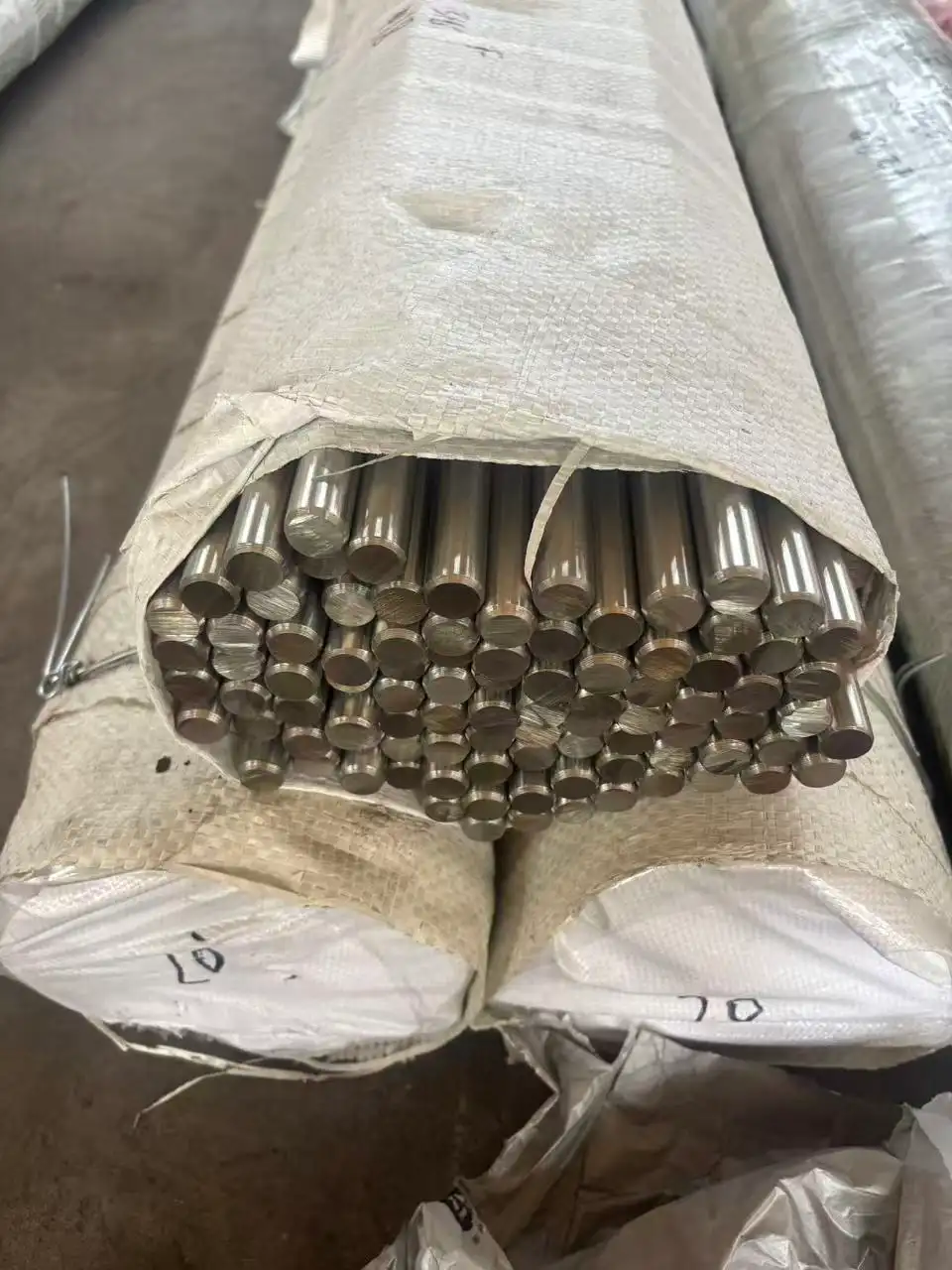
- Cold drawn, peeled and ground bar do not mean the same thing
- When h9 is justified, and when h10 or h11 is enough
- What h9 does not control
- What to inspect before shipment
- RFQ wording example
- Common purchasing mistakes
- Sources and scope
Introduction
A drawing that says 20 mm h9 is not asking for an approximate 20 mm stainless steel bar. It sets a permitted size window from 20.000 to 19.948 mm under the ISO 286-2 shaft tolerance table. That difference affects incoming inspection, machining allowance and whether the bar feeds consistently through a collet or guide bush.
This guide gives buyers a practical h9 vs h10 vs h11 stainless steel bar tolerance chart. It also explains what the tolerance code does not cover, which production routes may hold the requested size and what evidence to request before shipment.
Quick Answer
For stainless steel bar ordered to a shaft or external-size tolerance, h9 is tighter than h10, and h10 is tighter than h11. The lowercase h places the upper deviation at zero, so the actual size may equal the nominal size but must not exceed it. The lower limit depends on the nominal-size range and tolerance grade.
Before ordering, confirm six points:
- Which dimension carries the tolerance: round-bar diameter, hex-bar across-flats size or square-bar side size.
- Whether the drawing calls for h9, h10, h11 or a separate plus/minus limit.
- Which process route will hold it: cold drawn, turned or peeled, or centerless ground.
- Whether straightness, roundness and surface roughness need separate limits.
- What dimensional inspection record will be supplied.
- Whether the MTC, heat number, labels and packing list match the same batch.
Use the stainless steel bar tolerance lookup for a quick nominal-size check. The drawing and purchase order still control final acceptance.
h9 vs h10 vs h11 tolerance chart
These examples show the permitted size range for three common nominal round-bar diameters. Values follow the size intervals used in ISO 286-2.
| Nominal Diameter | h9 Size Range | h10 Size Range | h11 Size Range | Purchasing Difference |
|---|---|---|---|---|
| 10 mm | 10.000 to 9.964 mm | 10.000 to 9.942 mm | 10.000 to 9.910 mm | h9 gives the narrowest starting-size variation. |
| 20 mm | 20.000 to 19.948 mm | 20.000 to 19.916 mm | 20.000 to 19.870 mm | The selected class changes machining allowance and inspection limits. |
| 50 mm | 50.000 to 49.938 mm | 50.000 to 49.900 mm | 50.000 to 49.840 mm | A looser class may be enough when the part receives further turning. |
The table is a sourcing aid, not a replacement for the complete standard. Check the edition and tolerance wording named by the drawing or project documents.
ISO 286-2 lower deviations for h9, h10 and h11
For an h shaft tolerance, the upper deviation is zero. The table below combines the lower deviations used for nominal sizes up to 120 mm. All values are in millimeters.
| Nominal Size Range | h9 Lower Deviation | h10 Lower Deviation | h11 Lower Deviation |
|---|---|---|---|
| Up to 3 mm | -0.025 | -0.040 | -0.060 |
| Over 3 to 6 mm | -0.030 | -0.048 | -0.075 |
| Over 6 to 10 mm | -0.036 | -0.058 | -0.090 |
| Over 10 to 18 mm | -0.043 | -0.070 | -0.110 |
| Over 18 to 30 mm | -0.052 | -0.084 | -0.130 |
| Over 30 to 50 mm | -0.062 | -0.100 | -0.160 |
| Over 50 to 80 mm | -0.074 | -0.120 | -0.190 |
| Over 80 to 120 mm | -0.087 | -0.140 | -0.220 |
A boundary value belongs to the interval stated by the standard. For example, 10 mm uses the over-6-to-10-mm row, while a size above 10 mm moves to the next interval.
What the lowercase h means on a bar drawing
The letter and number do different jobs. Lowercase h identifies the tolerance-zone position for an external feature such as a shaft. Its upper deviation is zero. The number identifies the tolerance grade, with a lower number giving a narrower zone.
That wording matters in purchasing. A quote for 20 mm bright round bar does not automatically mean 20 mm h9. The supplier needs the tolerance class or explicit limits before selecting stock, production and inspection routes.
The dimension must also be clear. Round bar is normally controlled by diameter. A stainless steel hex bar inquiry normally uses across-flats size, while stainless steel square bar uses side size. Do not transfer a round-bar h9 note to another shape without identifying the dimension it applies to.
Cold drawn, peeled and ground bar do not mean the same thing
A finish name is not proof of a tolerance class. The achievable range depends on diameter, grade, starting stock, straightening, finishing equipment, length and the mill's agreed inspection method.
| Supply Route | What It Normally Changes | Buyer Use | Boundary to Confirm |
|---|---|---|---|
| Cold drawn / bright bar | Improves dimensional consistency and surface over rough hot-rolled stock | General CNC stock and bar-feeding work | Do not assume every cold-drawn size is h9. |
| Peeled or turned bar | Removes the outer layer and gives machining allowance on larger bar | Forging stock, shafts and further machining | Confirm the finished diameter and remaining allowance. |
| Centerless ground bar | Targets tighter diameter control and a smoother cylindrical surface | Precision shafts, pins, collets and controlled feeding | Specify size, tolerance, straightness and roughness separately. |
| Hot-rolled bar | Provides a broader starting-stock route | Forging, heavy machining and less size-sensitive work | It normally needs more machining allowance. |
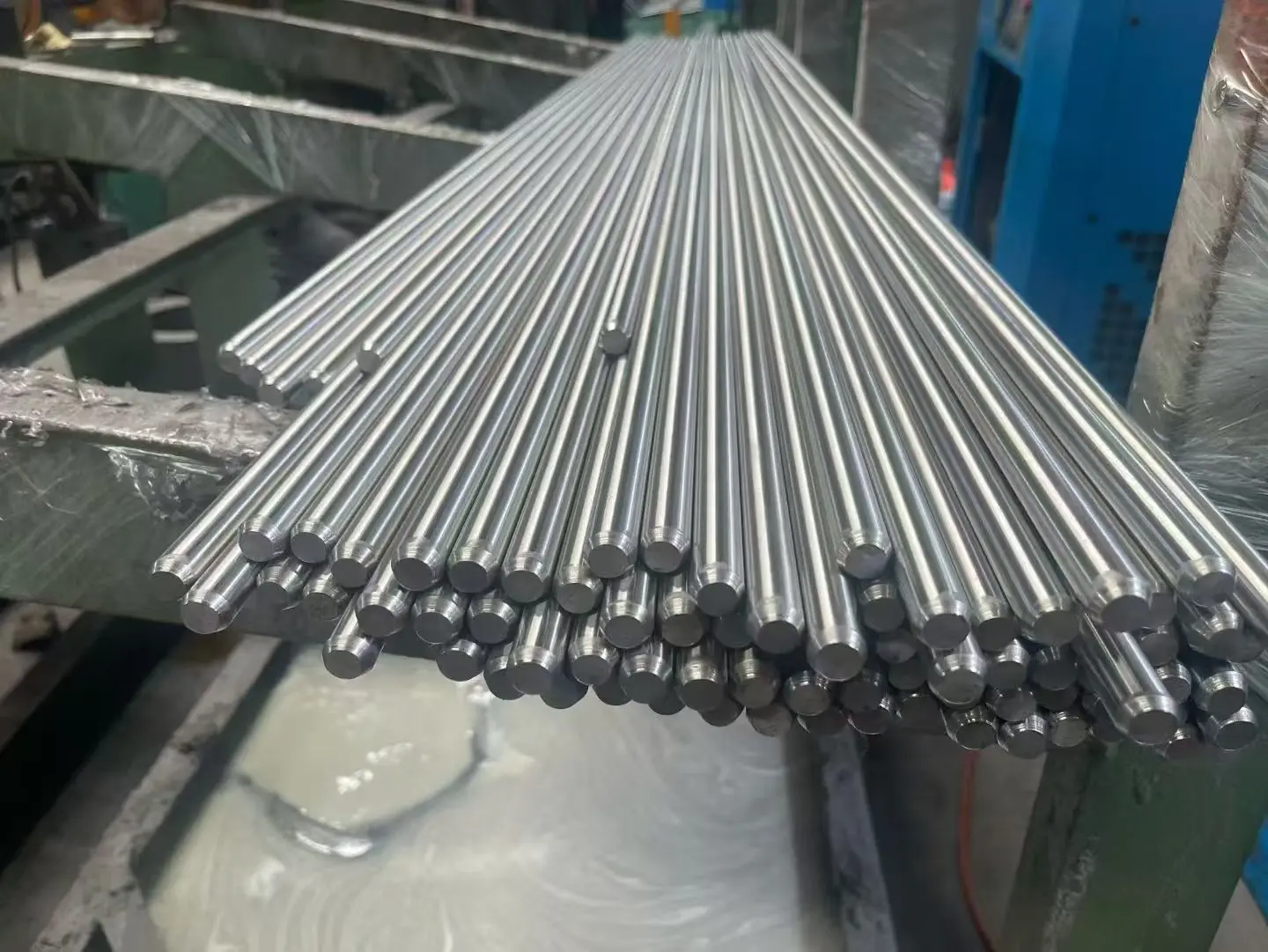
The cold drawn stainless steel bar page explains the cold-finishing route. For tighter cylindrical work, compare the centerless ground stainless steel bar page before fixing the RFQ wording.
When h9 is justified, and when h10 or h11 is enough
The tightest available class is not automatically the best purchase. Start with the finished part and the first machining operation.
| Order Situation | Sensible Starting Point | Why |
|---|---|---|
| Bar feeds directly into a collet, guide bush or automatic lathe | h9 may be justified | Starting-size variation can affect feeding and setup stability. |
| The bar will receive ordinary CNC turning with planned allowance | h10 may be enough | It provides controlled stock without buying unnecessary precision. |
| The material is a blank for heavier turning or later grinding | h11 or explicit machining allowance may be enough | The next operation removes the starting surface and size variation. |
| The finished bar itself acts as a shaft or pin | Follow the drawing fit and inspection requirement | Size, form, straightness and surface may all matter. |
| The drawing gives plus/minus limits instead of an ISO class | Quote the stated limits | Do not convert the requirement without buyer approval. |
For general round-bar sourcing, see the stainless steel round bar supply page. It separates diameter tolerance from straightness, roundness, surface condition and cut length.
What h9 does not control
An h9 callout controls a size limit. By itself, it does not define every characteristic that matters to CNC production. Add separate requirements when the application needs them:
- Straightness: important for long bars, bar feeders and rotating shafts.
- Roundness or ovality: important where the bar rotates or fits a close cylindrical feature.
- Surface roughness: important for finished shafts, seals and visible components.
- Decarburization or surface-defect limits: relevant only when the grade, process or application calls for them.
- Cut-length tolerance and end condition: important for automatic loading, fixed blanks and packing.
This is a common source of disputes. A batch can pass the h9 diameter limits and still be unsuitable if the drawing also needed tighter straightness or surface roughness but the purchase order never stated it.
What to inspect before shipment
A Mill Test Certificate does not prove h9 tolerance. The MTC identifies the material batch through grade, chemistry, mechanical properties, heat number and standard wording. Dimensional acceptance needs a separate inspection record or agreed measurement evidence.
Before releasing a precision bar shipment, ask for:
- the ordered nominal size and tolerance class on the inspection record;
- measured values taken from the agreed number of bars and positions;
- the measurement method and instrument type when the project requires them;
- straightness, roundness or roughness results when those limits are on the PO;
- bar or bundle labels showing the same heat number as the MTC and packing list;
- photos of the bundle condition, end protection and shipping marks.
For document traceability, use the stainless steel MTC checklist before shipment release. Keep the MTC check and the dimensional check as two connected but separate approval steps.
RFQ wording example
The cleanest RFQ states the controlled dimension and the evidence required. A Thailand machining buyer could write:
SUS304 cold-drawn round bar, diameter 20 mm h9, straightness max. 1 mm/m, 3 m fixed length, 500 kg trial order. MTC and dimensional inspection record required. Please confirm surface route, cut-length tolerance, packing and FOB price. Destination: Laem Chabang, Thailand.
Do not copy the straightness value into another order unless it comes from the drawing or production requirement. It is included here only to show that straightness must be written separately from h9.
For hex bar, replace diameter with across-flats size. For square bar, state the side size. If the drawing mixes metric and imperial dimensions, identify which unit controls final acceptance; a nominal conversion error can be larger than the entire h9 tolerance zone.
Common purchasing mistakes
- Ordering bright bar and assuming the word bright guarantees h9.
- Requesting h9 without naming the dimension or product shape.
- Checking the MTC but not asking for measured dimensions.
- Adding h9 while leaving straightness, roughness and cut length undefined.
- Converting a metric drawing to the nearest inch stock size without converting the limits.
- Paying for h9 when the first production step removes enough material to make h10 or h11 sufficient.
Sources and scope
The tolerance values in this guide are based on ISO 286-2:2010, Geometrical product specifications (GPS) - ISO code system for tolerances on linear sizes - Part 2: Tables of standard tolerance classes and limit deviations for holes and shafts. ISO 286-1:2010 provides the basis of the code system.
Always follow the standard edition, drawing and customer-specific acceptance criteria named by the order. The tables above cover selected h9, h10 and h11 external-size limits up to 120 mm; they are not a complete reproduction of ISO 286-2.
Conclusion
The useful question is not whether h9 is better than h10 or h11. It is whether the bar's starting-size window matches the machining route and final part. h9 can make sense for controlled feeding and shaft work. h10 often suits general machining stock. h11 may be sufficient when heavier machining or later grinding follows.
Write the controlled dimension, process route and separate form or surface limits into the RFQ. Then match the dimensional report to the bar labels, MTC and packing list before shipment release.
Frequently Asked Questions (FAQ)
Q. What does h9 tolerance mean for stainless steel bar?
A. For a shaft or external-size tolerance, h9 places the upper deviation at zero and allows the actual size to fall below nominal by the applicable ISO 286-2 value. A 20 mm h9 round bar, for example, has a size range of 20.000 to 19.948 mm.
Q. Is h9 always better than h10 or h11 for CNC machining?
A. No. h9 is tighter, but the drawing and machine setup should justify it. h10 or h11 may leave enough machining allowance at a lower processing cost, while some shaft or bar-feeding jobs need h9 or a ground finish.
Q. Does a Mill Test Certificate prove h9 tolerance?
A. No. An MTC confirms material information such as grade, chemistry, mechanical properties and heat number. Ask for a separate dimensional inspection record when the order requires proof of h9, h10 or h11 size limits.
Q. Does h9 also control straightness, roundness and surface roughness?
A. No. The h9 size limit does not automatically define straightness, roundness, surface roughness or cut-length tolerance. Put each required characteristic on the drawing or purchase order.
Q. How should I specify h9 stainless steel bar in an RFQ?
A. State the grade, bar shape, nominal dimension, h9 or other tolerance class, surface route, straightness if critical, length, quantity, inspection record, MTC requirement and destination. For hex bar, identify across-flats size; for square bar, identify side size.
CTA
Send the grade, bar shape, nominal size, tolerance class, surface route, straightness if critical, length, quantity, inspection record, MTC requirement and destination through the contact page. FX Stainless Steel will check the available production route, packing plan and quotation basis for your order.