
Cost-Saving Guide: Round Bar vs Hex Bar vs Square Bar for Stainless Steel Machining
Compare round bar, hex bar and square bar for stainless steel machining. Learn which inox bar shape fits shafts, CNC parts, brackets and Southeast Asia sourcing needs.
In This Guide
Introduction
A stainless steel bar quote is not only about grade and price.
Shape also changes the machining path.
For many buyers in Vietnam, Thailand, Singapore and Indonesia, the real question is simple: should the part start from round bar, hex bar or square bar?
In Vietnam, many buyers also call stainless steel inox. So an inox bar inquiry still needs the same shape, grade and tolerance review.
This guide compares round bar vs hex bar vs square bar for stainless steel machining. It is written for CNC shops, fastener buyers, valve part makers and project teams that need a practical starting shape.
Quick Answer: Which Shape Do You Need?
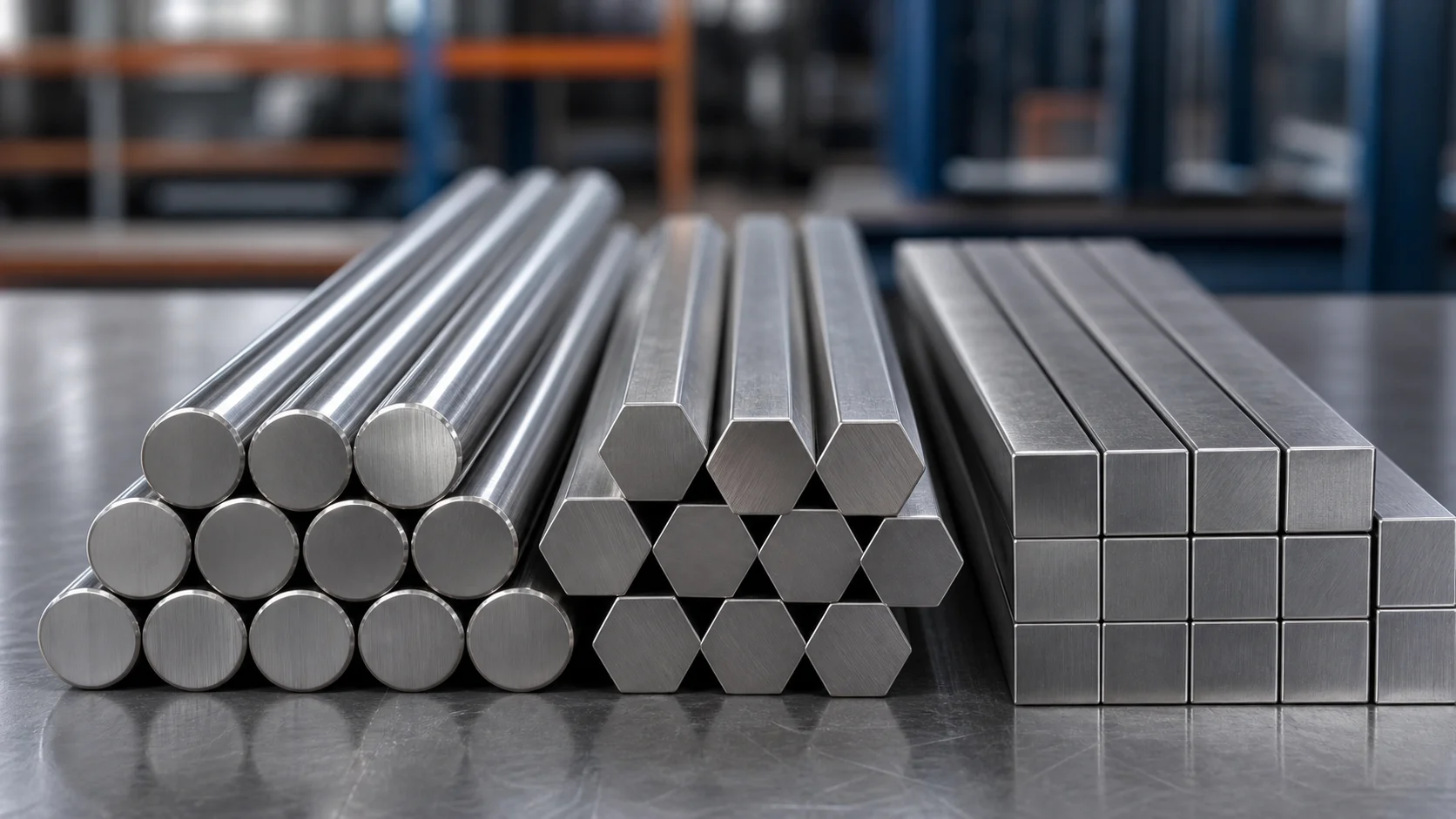
Stainless Steel Round Bar is the common choice for shafts, pins, rollers and rotational parts.
Hex Bar is useful for nuts, couplings, fittings and wrench-flat parts. If the profile matches the drawing, it can reduce six-side milling.
Square Bar is practical for brackets, fixtures, blocks and flat-sided blanks where the final part already has a square or block-like geometry.
The best shape is the one closest to the final part. That usually means less cutting, less waste and fewer extra machining steps.
Round vs Hex vs Square: Technical Comparison
The table below is a practical shape selection guide. It does not replace the drawing. It helps buyers ask better questions before quotation.
| Shape | Best For | Common Process | Cost Logic | Southeast Asia Stock Review |
|---|---|---|---|---|
| Round Bar | Shafts, pins, rollers, turned parts | CNC turning, automatic lathe work | Natural path for rotational parts | Commonly reviewed in 303, 304 and 316 |
| Hex Bar | Nuts, couplings, fittings, valve flats | Turning with less profile milling | Can reduce six-side milling when flats match the drawing | Commonly reviewed in 303 and 304; 316 by project |
| Square Bar | Brackets, fixtures, blocks, flat-sided blanks | Cutting, milling, drilling | Practical when the part keeps flat sides | Stock depends on grade, side length and finish |
Data note: stock and production path depend on grade, size, finish, tolerance and order requirement. Buyers should confirm the final route before payment or production release.
Deep Dive: When to Specify Each Shape
The CNC Workhorse: Round Bar
Round bar is the first choice for most turned parts. It feeds well into CNC lathes and automatic machines. It also fits shafts, pins, rollers and threaded components.
For high-speed machining, 303 stainless steel bar is often reviewed because it supports easier chip control than 304 in many jobs. 304 stainless steel bar fits general industrial use. 316 stainless steel bar is reviewed when corrosion risk is higher.
If your drawing shows a round part, round bar is usually the cleanest starting point.
The Fitting Specialist: Hex Bar
Hex bar matters when the final part needs flats.
If a nut, coupling, connector or valve part already has a hex head, starting from stainless steel hex bar can reduce extra profile milling. The buyer still needs to confirm across-flats size, corner requirement, tolerance and final part geometry.
Hex bar does not save cost in every job. It helps when the shape matches the drawing.
The Structural Blank: Square Bar
Square bar is useful when the final part is a block, bracket, fixture or flat-sided blank. It can reduce the amount of material that must be removed from a round starting shape.
For square bar inquiries, send side length, cut length, finish and application. If the size is not a common route, FX Stainless Steel can review whether stock, cutting or production is more practical.
Square bar buyers can start from the stainless steel bar hub or send a direct request through the bar quote page.
Important: Standard & Tolerance
Shape is only one layer of the specification.
For stainless steel bar orders, ASTM A276 / ASTM A479 can be reviewed when required. The final standard should match the drawing, order document and end-use requirement.
Tolerance also matters. Round bar may need h9, h10 or h11 tolerance. Hex bar needs correct across-flats control. Square bar needs side length and straightness review.
If tolerance is part of the buying decision, read our h9 vs h10 vs h11 stainless steel bar tolerance guide.
MTC Check Before Ordering
No matter which shape you choose, verify the Mill Test Certificate before shipment.
The MTC should match grade, heat number, chemical composition and product form. The packing list and invoice should also match the order description.
For a simple document workflow, use our stainless steel MTC verification guide before confirming repeat orders.
Buyer's Checklist for Inquiries
A useful inquiry should include:
- grade: 303, 304, 316 or another requested grade
- shape: round, hex or square
- size: diameter, across-flats size or side length
- tolerance: h9, h10, h11 or drawing tolerance
- finish: cold drawn, bright, polished, ground or black
- quantity: trial quantity and repeat volume if known
- destination: country, city or port
- application: shaft, nut, connector, bracket, fixture or other part
For Vietnam buyers, terms such as inox 304 bar or inox 316 bar should still be matched with the actual grade, MTC and drawing requirement.
These details help the supplier judge the best starting shape instead of quoting a generic bar price.
Conclusion
Round bar, hex bar and square bar all have a place in stainless steel machining.
The best choice depends on the final part shape. Round bar fits turning work. Hex bar helps when the drawing needs flats. Square bar works well for blocks, brackets and fixtures.
Send grade, shape, size, tolerance, finish, quantity and destination. FX Stainless Steel can review whether round, hex or square bar is the practical starting shape for your machining or fabrication job.
Frequently Asked Questions (FAQ)
Q. Is round bar cheaper than hex bar?
A. Round bar is often the most common starting shape, so it can be easier to source in many grades and sizes. The final cost still depends on grade, diameter, tolerance, finish, cutting length and current stock condition.
Q. When should I choose stainless steel hex bar?
A. Choose stainless steel hex bar when the final part needs wrench flats, nuts, couplings, fittings or a hex profile. If the across-flats size matches the drawing, hex bar can reduce extra profile milling.
Q. Is square bar better for brackets?
A. Square bar can be practical for brackets, fixtures, blocks and flat-sided blanks because the starting shape is closer to the final geometry. Buyers should confirm side length, finish, tolerance and cutting plan before ordering.
Q. Which stainless steel bar shape is best for CNC turning?
A. Round bar is usually the first choice for CNC turning, shafts, pins and rotational parts. For free-machining work, 303 stainless steel round bar is often reviewed before 304 or 316.
Q. Can FX Stainless Steel quote round, hex and square bar together?
A. Yes. FX Stainless Steel can review round, hex and square bar requirements together when the buyer sends grade, shape, size, tolerance, finish, quantity and destination.
Q. Can you provide cut-to-length service for square bars?
A. Cut-to-length service can be reviewed for square bars and other stainless steel bar shapes. Availability depends on grade, side length, order quantity, cutting tolerance and packing requirement.
CTA
Need help choosing the right stainless steel bar shape? Send your drawing or requirement through our stainless steel bar quote page.