Stainless Steel for Palm Oil Processing Equipment: 316L and Duplex Buyer Guide
A practical buyer guide to stainless steel for palm oil processing equipment, including 304, 316L, duplex 2205, FFA corrosion risk, MTC checks and RFQ wording.
In This Guide
- Introduction
- Quick Answer: 304, 316L and Duplex in Palm Oil Equipment
- Why Palm Oil Processing Creates Corrosion Risk
- Where 316L Stainless Steel Is Commonly Reviewed
- When Duplex Stainless Steel 2205 Deserves Review
- Pipe, Plate and Bar Requirements in Palm Oil Equipment
- The MTC Trap: Documents Help, But They Do Not Replace Application Review
- Packing and Export Notes for Southeast Asia Buyers
- RFQ Checklist for Palm Oil Equipment Buyers
- How FX Stainless Steel Reviews Palm Oil Equipment Inquiries
Introduction
Palm oil processing is not the same as ordinary light food-equipment fabrication. A mill or refinery may handle hot oil, water, fatty acids, cleaning chemicals, humid air and welded equipment in the same production chain. That is why stainless steel for palm oil processing equipment should be reviewed as an application decision, not only as a grade name on a purchase order.
For many buyers in Indonesia, Malaysia and other Southeast Asia markets, the real question is practical: when is 304 enough, when should 316L be used, and when does duplex stainless steel deserve a closer review?
This guide is written for buyers, equipment fabricators and project sourcing teams who need pipe, plate, bar or cut parts for palm oil mills and refineries. It explains where 316L stainless steel palm oil equipment makes practical sense, where duplex stainless steel 2205 may fit, and what details should be written clearly before quotation.
Quick Answer: 304, 316L and Duplex in Palm Oil Equipment
There is no single stainless grade that fits every palm oil processing zone. The right material depends on temperature, fluid chemistry, chloride level, cleaning method, welding, mechanical load and how difficult the part is to replace.
| Material route | Practical buyer use | Main caution |
|---|---|---|
| 304 / 304L stainless steel | Lower-risk frames, covers, supports, general panels and some mild service areas | Should be reviewed carefully for hot, wet, chloride-bearing or fatty-acid service |
| 316L stainless steel | Tanks, transfer lines, food-contact parts, welded equipment and corrosion-focused fabricated parts | Still needs process-condition review; it is not a guarantee against every corrosive environment |
| Duplex 2205 stainless steel | Higher-load parts, selected shafts, pressure-related parts, high-chloride or lifecycle-critical areas | Needs stronger document control, welding review and availability check before ordering |
For routine dry-area structures, 304 may still be practical. For many wet, welded or food-contact areas, buyers often review 316L. For harsher process zones or difficult-to-replace components, duplex 2205 may be worth reviewing with the project engineer.
Why Palm Oil Processing Creates Corrosion Risk
Palm oil processing can expose equipment to a mixed environment rather than one simple corrosion factor. Crude palm oil, process water, cleaning routines, high humidity and elevated temperatures can all affect material choice.
One important issue is free fatty acids (FFA). The exact corrosion risk depends on process stage, temperature, moisture, contaminants and cleaning method, but fatty-acid corrosion is a real reason buyers do not treat palm oil equipment as ordinary indoor fabrication.
Chlorides are another concern. Chloride can come from water sources, cleaning chemicals or the broader operating environment. In the wrong condition, chloride exposure can increase the risk of pitting corrosion, crevice corrosion or stress corrosion cracking, especially where heat, tensile stress or poor cleaning practice is also present.
This is why a useful palm oil stainless steel inquiry should include the equipment use, fluid condition and cleaning expectation. A supplier cannot judge the material route properly from the phrase "stainless steel pipe for palm oil" alone.
Where 316L Stainless Steel Is Commonly Reviewed
316L stainless steel is a common upgrade path when buyers need stronger corrosion resistance than 304 and better control around welding. The molybdenum content helps improve pitting resistance compared with 304, while the lower carbon route is often useful when welded fabrication or project specification asks for it.
In palm oil equipment, 316L may be used or specified for:
- transfer piping and process lines
- sterilizer tanks and clarifier shells
- tanks, vessels and fabricated plate parts
- food-contact or cleaning-exposed surfaces
- valve, pump and fitting areas where corrosion risk matters
- welded assemblies where low-carbon wording is required
- selected refinery or downstream processing equipment
This does not mean every palm oil plant must upgrade every part to 316L. Some low-risk structural parts may still use 304 or another route. The better habit is to divide the equipment by corrosion exposure and maintenance risk, then choose the material for each zone.
If your project needs flat products, review our 316 stainless steel plate supply page before preparing the RFQ.
When Duplex Stainless Steel 2205 Deserves Review
Duplex stainless steel is not a marketing upgrade. It is a different material family with both austenitic and ferritic phases. Buyers compare duplex 2205 when they need a combination of higher strength and stronger resistance to chloride stress corrosion cracking than common 300-series stainless steels can comfortably provide.
For palm oil processing equipment, duplex 2205 may deserve review when:
- the component faces higher mechanical load
- replacement would be difficult or costly
- chloride exposure is stronger or more continuous
- pitting, crevice corrosion or stress corrosion cracking is a known concern
- the part is pressure-related or safety-sensitive
- the project has strict MTC, PMI or third-party inspection requirements
Duplex can be useful for selected shafts, pump or valve parts, pressure-related components, high-load supports, fabricated plate parts or harsher process zones. But it should not be selected only because it sounds stronger. Welding, phase balance, surface condition, testing scope and project approval all matter.
For a deeper material comparison, read our duplex stainless steel 2205 and 2507 buyer guide. For flat-product sourcing, review duplex stainless steel plate. For machined or loaded parts, review duplex stainless steel bar.
Pipe, Plate and Bar Requirements in Palm Oil Equipment
Palm oil equipment buyers rarely purchase only one product form. A single project may need pipe, plate, bar, fittings and cut parts. The material grade is only one part of the order.
| Product form | What buyers should confirm | Why it matters |
|---|---|---|
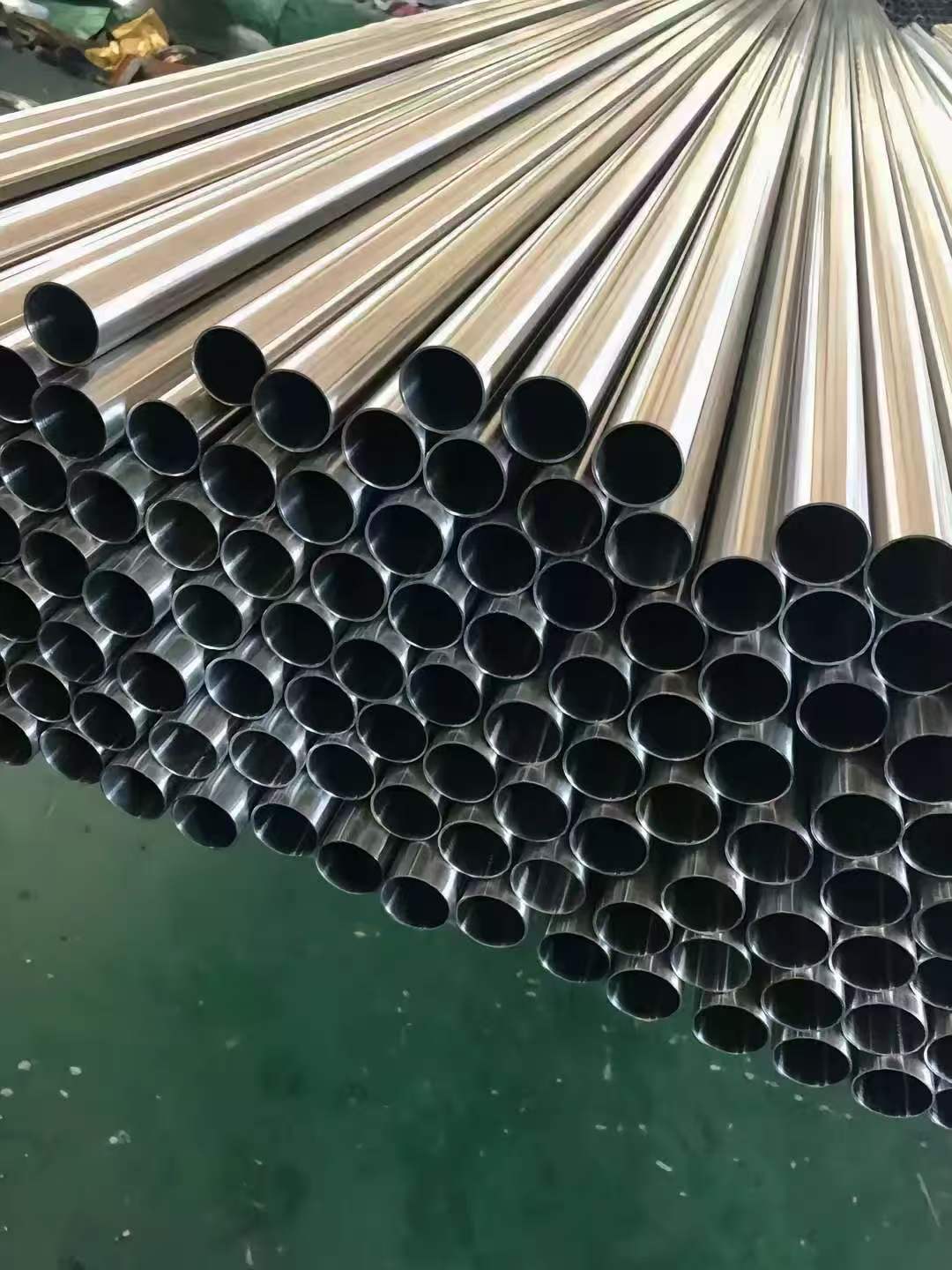
| Pipe | Welded or seamless, OD, wall thickness, schedule, end type, pickled or polished surface | A wrong pipe route can affect fit-up, cleaning and pressure review |
| Plate / sheet | Grade, thickness, width, length, surface, cutting plan and welding requirement | Tanks, covers and fabricated parts need clear flat-product wording |
| Bar | Round bar, forged bar, peeled bar, diameter, tolerance, straightness and machining allowance | Shafts, valve parts and machined blanks need more than a grade name |
| Cut pieces | Size, edge condition, marking, heat number traceability and packing | Helps fabricators control assembly and document matching |
For routine 304 pipe comparison, start with our 304 stainless steel pipe page. If the pipe will face stronger corrosion exposure, use the 304 route as a baseline and then compare whether 316L or another grade is needed.
The MTC Trap: Documents Help, But They Do Not Replace Application Review
A stainless steel MTC is important. It helps confirm grade wording, chemical composition, mechanical properties, heat number and standard reference. For palm oil equipment, those checks are part of the buying process.
But an MTC does not prove that the material will resist every palm oil process condition. It does not fully describe the cleaning chemical, operating temperature, weld condition, crevice design or maintenance practice. It also does not replace PMI, third-party inspection or corrosion testing when the project requires them.
Before shipment, buyers should review:
| Check item | What to verify |
|---|---|
| Grade wording | 304, 304L, 316L, 2205, UNS number or EN number matches the PO |
| Standard | ASTM, EN, JIS or project wording is consistent across documents |
| Heat number | MTC, labels and packing list trace back to the same batch |
| Chemistry | Mo, Cr, Ni, N and carbon values match the specified grade route |
| Product form | Pipe, plate, bar or cut pieces match the order, not only the grade |
| PMI / inspection | Requirement is agreed before shipment, not after arrival |
If MTC review is new for your team, read our guide on how to read a stainless steel MTC before confirming the purchase order.
Packing and Export Notes for Southeast Asia Buyers
For palm oil equipment projects, sea freight and warehouse handling can create avoidable problems if packing is treated casually. Stainless steel may be corrosion-resistant, but it can still suffer surface damage, contamination, moisture marks, label confusion or edge damage during transit.
For pipe orders, confirm bundle packing, end protection, labels and whether mixed-container loading is planned. For plate orders, confirm wooden pallet or case style, moisture protection, edge protection and surface separation where needed. For bar orders, confirm bundle weight, straightness protection, cut-length marking and heat number traceability.
Southeast Asia buyers should also tell the supplier the destination port or warehouse early. Packing for a short domestic truck route is not the same as packing for export sea freight through humid tropical conditions.
RFQ Checklist for Palm Oil Equipment Buyers
A clear RFQ helps the supplier quote the real requirement instead of guessing. It also helps the buyer compare quotations fairly.
Include these details:
- equipment use: tank, pipe line, shaft, valve part, cover, frame or cut piece
- process condition: hot oil, cleaning exposure, water, chloride, chemical or general dry area
- material option: 304, 304L, 316L, duplex 2205 or project-specified grade
- standard: ASTM, EN, JIS or buyer drawing wording
- product form: pipe, plate, sheet, bar, cut piece or mixed package
- dimensions: OD, wall thickness, schedule, thickness, width, length, diameter or tolerance
- surface condition: pickled, polished, No.1, 2B, machined or as required
- document requirement: MTC, heat number, PMI, third-party inspection or certificate format
- quantity and delivery batch plan
- destination port, country and packing requirement
Weak inquiry:
Need stainless steel for palm oil equipment. Quote best price.
Better inquiry:
Please review 316L stainless steel pipe for palm oil processing equipment, ASTM standard to confirm, OD 60.3 mm, SCH40S, welded or seamless option, MTC required, destination Port Klang. Please confirm packing, heat number traceability and quotation basis.
Indonesia example:
Please review 316L stainless steel plate for a palm oil clarifier tank, ASTM A240, 8 mm x 1500 mm x 6000 mm, MTC required, destination Belawan, Indonesia. Please confirm cutting tolerance, packing method and heat number traceability.
For duplex review:
Please review duplex 2205 stainless steel plate, ASTM A240, 12 mm x 1500 mm x 6000 mm, No.1 surface, MTC and PMI required, for palm oil refinery equipment fabrication. Destination Indonesia. Please confirm availability, cutting option and export packing.
How FX Stainless Steel Reviews Palm Oil Equipment Inquiries
When FX Stainless Steel reviews a palm oil equipment inquiry, we first keep the buyer's application visible. We do not reduce the question to one grade too early.
A practical review usually covers:
- whether the part is dry-area, wet-area, food-contact, cleaning-exposed or high-load
- whether 304 is enough or 316L is the more practical route
- whether duplex 2205 deserves review for higher corrosion or strength risk
- which product form is needed: pipe, plate, bar or cut part
- whether the MTC, heat number, labels and packing list can stay consistent
- whether export packing is suitable for the destination route
For real projects, availability and quotation depend on the exact specification, current stock route, processing need and document requirement. That is why one clear RFQ is better than several incomplete price requests.
Conclusion
Palm oil processing equipment needs material selection that respects the working environment. 304 can still have a place in lower-risk areas. 316L becomes more practical when corrosion, welding and food-contact requirements become more important. Duplex 2205 may be worth reviewing when chloride stress, strength or lifecycle risk is higher.
The safer buying habit is not to ask which grade is best in general. Ask which material fits the process zone, fabrication route, inspection requirement and maintenance risk.
If your team is preparing a palm oil mill or refinery equipment order, send the application, material option, size, quantity, document requirement and destination through our contact page. FX Stainless Steel can review the pipe, plate or bar requirement before quotation.
Frequently Asked Questions (FAQ)
Q. Is 304 stainless steel enough for palm oil processing equipment?
A. 304 stainless steel can be suitable for lower-risk frames, covers and general dry-area parts, but it should be reviewed carefully for hot, wet, chloride-bearing or fatty-acid service. Many buyers compare 304 with 316L when corrosion risk becomes more important.
Q. Why is 316L stainless steel used in palm oil processing equipment?
A. 316L contains molybdenum and has lower carbon than standard 316, so buyers often review it for tanks, transfer lines, food-contact equipment and fabricated parts where chloride, cleaning chemicals, welding or fatty-acid corrosion risk matters.
Q. When should duplex 2205 be reviewed for palm oil equipment?
A. Duplex 2205 becomes worth checking when the equipment faces higher chloride stress, higher mechanical load, harder-to-replace components or stronger lifecycle-risk pressure. It is not an automatic replacement for 316L, and the final choice should follow the process condition and engineering requirement.
Q. Can an MTC prove that stainless steel will resist palm oil corrosion?
A. No. An MTC helps confirm grade, chemistry, mechanical properties, heat number and standard wording. It does not prove final service performance. Buyers should also review temperature, fluid condition, cleaning method, welding, surface condition and inspection requirements.
Q. What should buyers send for a palm oil equipment stainless steel quote?
A. Send the grade or material option, product form, size, standard, surface, quantity, equipment use, process condition, MTC requirement, inspection request, destination port and packing expectation. Clear RFQ wording helps avoid comparing unequal quotations.
CTA
Sourcing stainless steel for palm oil processing equipment? Send your grade, product form, dimensions, equipment use, quantity, MTC requirement and destination. FX Stainless Steel can help review whether 304, 316L, duplex 2205 or another route is more practical before quotation.