Stainless Steel for Data Center Projects: Cooling, Fire Protection & Structure
A practical contractor guide to stainless steel for data center cooling, fire protection and structural support, including 304, 316L, pipe standards, MTC checks, staged delivery and RFQ wording.
In This Guide
- Quick Answer
- Cooling Water and Chilled-Water Piping
- Fire Protection and Utility Pipe Considerations
- Structural Tube, Supports and Equipment Frames
- 304 vs 316L in Hot, Humid or Coastal Sites
- MTC, Testing, Packing and Staged Delivery
- RFQ Checklist for Data Center Contractors
- How FX Stainless Steel Reviews Data Center Inquiries
Quick Answer
Data centers are often discussed as IT projects, but the physical site also depends on mechanical rooms, cooling water systems, fire protection routes, equipment supports, cable-tray supports and staged construction logistics. That is why stainless steel for data center cooling, fire protection and structural support should be reviewed as a project-material decision, not only as a commodity pipe order.
For Southeast Asia projects in places such as Johor, Batam, Singapore, Malaysia, Thailand and Indonesia, the buyer usually needs to balance three questions: where 304 stainless steel is practical, where 316L should be reviewed, and how pipe, tube, plate and coil documents can stay traceable during a fast construction schedule.
This guide is written for MEP contractors, project buyers and fabricators who need stainless steel pipe for data center cooling, utility pipe, structural tube, base plates, brackets or fabricated support parts.
Cooling Water and Chilled-Water Piping
Data center cooling systems can include chilled-water loops, condenser water routes, make-up water lines and utility connections around plant rooms. The exact material requirement is normally controlled by the project specification, pressure class, water chemistry and local code review.
When stainless steel pipe is specified or considered, buyers should not ask only for a pipe price. A useful data center cooling pipe supplier discussion starts with product form, standard, pipe route and document requirements.
| Item to confirm | Why it matters for cooling systems |
|---|---|
| Pipe type | Welded and seamless pipe are not the same quotation route |
| Standard | ASTM A312, ASTM A554 or project wording affects MTC and acceptance |
| OD and wall thickness | Needed for fit-up, support load and weight calculation |
| Schedule | SCH10S and SCH40S may serve different pressure or design needs |
| Surface and cleaning | Pickled, passivated or polished requirements should be stated early |
| Test requirement | Hydrostatic test, eddy current test or other NDT must be agreed before shipment |
Stainless steel can reduce rust-scale concerns compared with carbon steel in suitable water conditions, but it is not a replacement for proper water treatment, flushing, insulation control and engineering approval. The supplier can help confirm material and document scope; the project engineer should still confirm system design.
For routine 304 pipe wording, review our 304 stainless steel pipe page. For broader pipe sourcing, see stainless steel pipe supply.
Fire Protection and Utility Pipe Considerations
Data center fire protection systems are governed by project codes, fire-safety design and local approval. A stainless steel material decision should follow the fire engineer's specification and the authority review, not a supplier's general preference.
Project documents may reference NFPA 75 for IT equipment fire-protection context and NFPA 13 for sprinkler scope. Buyers should keep the exact standard wording visible in the RFQ instead of translating it into a generic stainless steel pipe request.
That said, stainless steel for data center fire protection may be reviewed where corrosion control, clean internal pipe condition, dry-pipe or pre-action system risk, humid mechanical rooms or long service access matters. In dry-pipe or pre-action layouts, low points and air-water interfaces can create corrosion concerns if drainage, air quality and maintenance are weak.
A buyer should be careful with broad claims. Stainless steel does not make a fire system risk-free. It can be one material route to review when the specification calls for corrosion-resistant pipe or when the project team wants cleaner internal surfaces and stronger traceability.
Before quoting fire protection or utility pipe, confirm:
- system type: wet, dry, pre-action, utility or other project route
- accepted material standard and code requirement
- pipe size, wall thickness and pressure class
- threaded, grooved, welded or flanged connection expectation
- internal surface and end protection requirement
- MTC, labels, heat number and inspection records
If the project requires exact fire-system compliance, the buyer should keep the consultant's wording visible in the RFQ instead of translating it into a generic stainless steel pipe request.
Some data center projects also include diesel generator fuel supply or return lines around backup power systems. If stainless steel is specified for selected fuel-service piping, separate this scope from chilled-water or fire-protection pipe and confirm fuel compatibility, connection type, cleaning, MTC and inspection scope with the project engineer.
Structural Tube, Supports and Equipment Frames
A data center also needs support structures. Stainless steel tube or fabricated stainless parts may be reviewed for cable tray supports, equipment skids, pipe supports, rooftop equipment frames, plant-room brackets, base plates and service platforms.
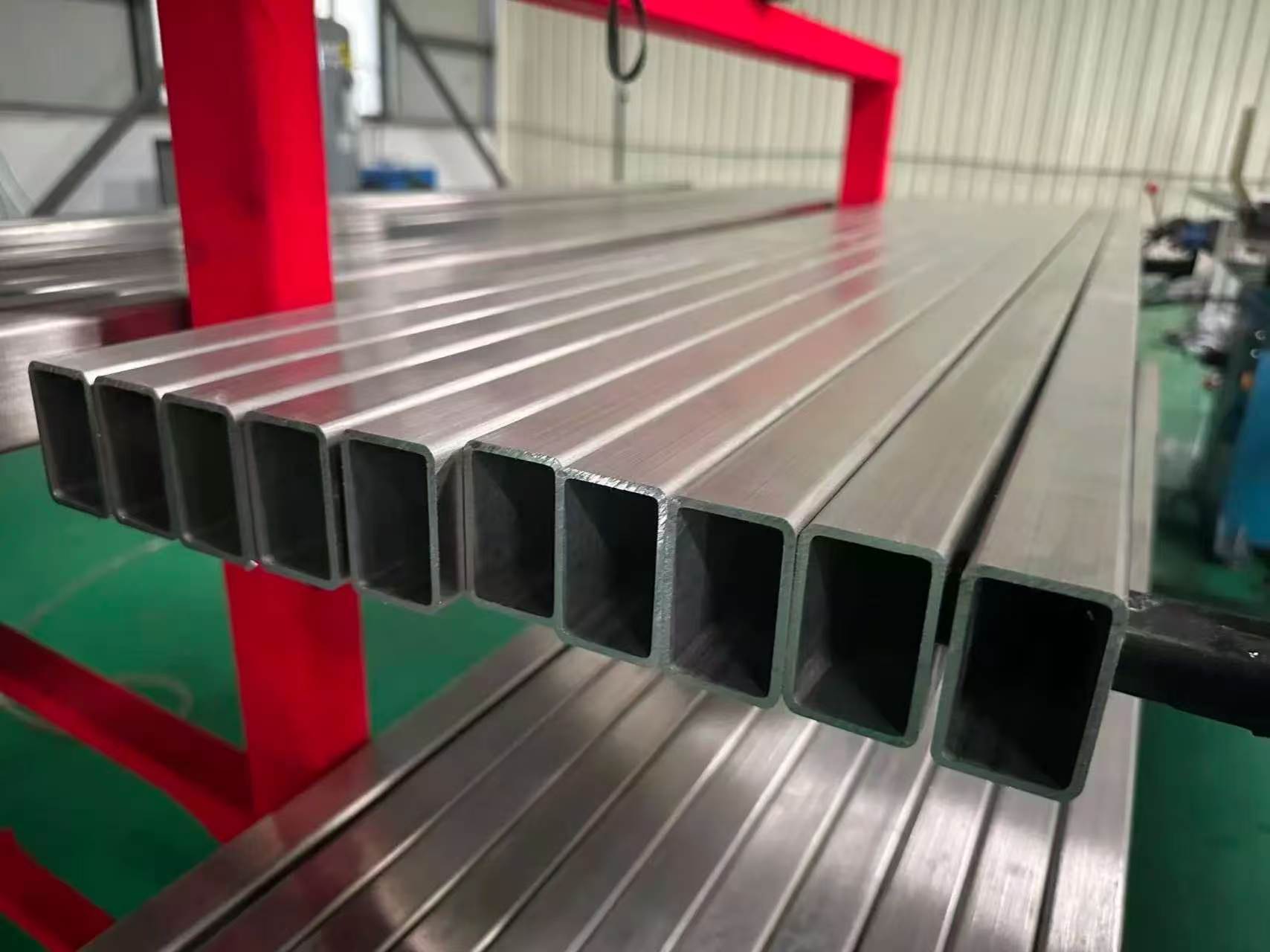
The keyword stainless steel structural tube data center can cover several different products. Some buyers mean rectangular or square stainless steel tube. Others mean pipe supports, fabricated frames or mixed shipments with plate and coil. The supplier should clarify the product form before quoting.
| Support item | Product route to review | Buyer check |
|---|---|---|
| Pipe supports and brackets | Tube, angle, flat bar or fabricated plate parts | Load, drawing, hole pattern, surface and packing |
| Cable tray support frames | Stainless steel tube or formed sheet parts | Tube size, wall thickness, finish and installation environment |
| Equipment base plates | 304 or 316L stainless steel plate | Thickness, flatness, cutting, drilling and MTC |
| Covers and light panels | Sheet or coil route | Grade, surface, thickness and protective film |
For dead-load planning, the stainless steel pipe weight calculator can help estimate theoretical pipe weight from OD, wall thickness, length and quantity. For base plates and brackets, review 304 stainless steel plate. If the project uses formed covers or sheet-metal parts, 304 stainless steel coil may be part of the supply route.
304 vs 316L in Hot, Humid or Coastal Sites
For many indoor data center areas, 304 stainless steel can be practical when the environment is controlled and chloride exposure is limited. It is common for general pipe, tube, panel and support discussions where the project specification accepts it.
316L stainless steel deserves review when the material is exposed to coastal air, outdoor rooftop conditions, humid utility rooms, chloride-bearing water, cleaning chemicals, higher corrosion concern or harder-to-replace locations. The molybdenum content in 316L improves pitting resistance compared with 304, while the low-carbon route may be useful where welding and document wording matter.
A simple buyer comparison is useful:
| Review point | 304 stainless steel | 316L stainless steel |
|---|---|---|
| Typical fit | Indoor controlled areas, general pipe and support parts | Outdoor, coastal, humid or chloride-risk areas |
| Corrosion margin | Good for many general conditions | Better pitting resistance because of molybdenum |
| Welding note | 304L may be reviewed when low carbon is required | 316L is already the low-carbon route in common wording |
| Buying caution | Do not use by habit in aggressive environments | Do not upgrade without checking availability and specification |
PREN is sometimes used as a pitting-resistance reference. In practical purchasing, buyers should treat it as a comparison clue, not a complete service guarantee. Real performance also depends on temperature, water chemistry, surface condition, welding, crevice design and maintenance.
MTC, Testing, Packing and Staged Delivery
Data center construction sites often move quickly. Materials may be delivered by phase, building zone, floor, system or contractor package. If labels and packing are weak, a correct material can still create site delays.
Before shipment, buyers should review:
| Check item | What to confirm |
|---|---|
| MTC | Grade, standard, chemistry, mechanical data and heat number |
| Product description | Pipe, tube, plate, coil or fabricated part matches the PO |
| Inspection scope | Hydrostatic test, eddy current test, PMI or third-party inspection if required |
| Labels | Bundle, heat number, size, system or phase marks stay readable |
| End protection | Pipe ends are capped or protected where cleanliness matters |
| Surface / passivation | Passivation is a chemical surface treatment used after fabrication or cleaning to help restore the stainless steel passive layer; if required, state it in the PO and inspection scope |
| Packing | Export pallets, cradles, waterproof wrapping and batch separation |
| Delivery plan | Phase, zone, floor or system grouping is agreed before loading |
For data center work, staged delivery is often as important as the material itself. A shipment organized by system package can reduce sorting time on site. A shipment mixed without labels can slow installation even when every pipe is technically correct.
For certificate review, use our guide on how to read a stainless steel MTC before approving shipment documents.
RFQ Checklist for Data Center Contractors
A clear RFQ helps the supplier quote the real scope. It also helps the contractor compare offers fairly.
Include these details:
- project use: cooling water, condenser water, fire protection, utility line, support frame, base plate or panel
- material grade: 304, 304L, 316L or project-specified grade
- product form: pipe, tube, plate, coil, cut piece or fabricated part
- standard: ASTM A312, ASTM A554, ASTM A240, EN, JIS or project wording
- dimensions: OD, wall thickness, Schedule, tube size, plate thickness, width, length or drawing size
- connection or processing: welded, seamless, grooved, threaded, flanged, cut, drilled or formed
- surface condition: pickled, passivated, polished, No.1, 2B or as required
- documents: MTC, heat number, PMI, NDT, hydrostatic test or third-party inspection
- packing: end caps, bundle labels, pallet, crate, moisture protection and phase marks
- destination: country, port, site phase and delivery schedule
Weak inquiry:
Need stainless steel pipe for data center. Quote best price.
Better inquiry:
Please quote 304 stainless steel pipe for data center chilled-water line, ASTM A312, welded pipe, OD 114.3 mm, SCH10S, pickled surface, MTC required, bundle labels by system package, destination Johor, Malaysia. Please confirm pipe weight, packing method and lead time.
For a coastal or outdoor route:
Please review 316L stainless steel pipe for rooftop data center utility route, ASTM A312, OD 88.9 mm, SCH40S, MTC and hydrostatic test record required, destination Singapore. Please confirm end protection, export packing and heat number traceability.
For structural tube:
Please quote stainless steel structural tube for data center equipment support frames, 304 or 316L option, rectangular tube 50 x 100 x 3 mm, cut length 6000 mm, MTC required, bundle packing with labels by installation zone.
How FX Stainless Steel Reviews Data Center Inquiries
When FX Stainless Steel reviews a data center inquiry, we first separate the requirement by system and product form. Cooling pipe, fire protection pipe, structural tube, base plate and formed cover are not the same supply route.
A practical review usually covers:
- whether the item is pipe, tube, plate, coil or a fabricated cut part
- whether 304 is enough or 316L should be reviewed for site exposure
- which standard and document wording the consultant or buyer requires
- whether welded or seamless pipe is needed
- whether testing, PMI or third-party inspection is required before shipment
- how heat number, labels and packing list will stay consistent
- how the shipment should be packed by phase, zone or system package
For real projects, availability and quotation depend on size, standard, current stock route, processing, testing and document requirements. The safest buying habit is to send the system use and project wording together with the size list.
Sources
Useful public references for data center engineering context and fire-protection review include:
- ASHRAE Data Center Resources
- Uptime Institute Tier Certification
- NFPA 75: Standard for the Fire Protection of Information Technology Equipment
- NFPA 13: Standard for the Installation of Sprinkler Systems
These references support the engineering context. Final material selection, fire-system approval and pressure design should follow the project specification, local code and consultant review.
Conclusion
Data center stainless steel buying is not only a pipe price question. Cooling water routes, fire protection systems, support frames, base plates and staged delivery packages each need different wording.
304 stainless steel can be practical for many indoor controlled areas. 316L should be reviewed for outdoor, coastal, humid or chloride-risk locations. For every route, MTC, heat number, inspection scope, packing and delivery labels should be confirmed before shipment.
Frequently Asked Questions (FAQ)
Q. What stainless steel products are commonly reviewed for data center projects?
A. Data center contractors may review stainless steel pipe for chilled-water or utility lines, stainless steel tube for supports and frames, plate for base plates or brackets, and coil or sheet for fabricated covers and panels. The final choice depends on the project specification, environment, pressure, load and document requirement.
Q. Is 304 stainless steel enough for data center cooling pipe?
A. 304 stainless steel can be a practical route for many indoor or controlled chilled-water applications, but the project team should review water chemistry, cleaning method, insulation condition, chloride exposure and site environment. Outdoor, coastal or humid utility areas may justify reviewing 316L.
Q. When should 316L be reviewed for data center pipe or tube?
A. 316L is worth reviewing when pipe, tube or supports face coastal air, humid outdoor service, chloride-bearing water, cleaning chemicals, rooftop exposure or hard-to-replace locations. It should be selected according to the engineering specification, not only as a general upgrade.
Q. What documents should a data center pipe supplier provide?
A. Buyers commonly review the MTC, heat number, standard wording, pipe or tube description, size records, packing list, labels and any agreed inspection records. Additional NDT, hydrostatic test or PMI requirements should be confirmed before production or shipment.
Q. What should be included in a data center stainless steel RFQ?
A. Send the system use, grade, product form, standard, OD, wall thickness, Schedule or tube size, surface condition, quantity, MTC and inspection requirements, delivery phase, destination and packing expectation. Clear wording helps suppliers quote the same scope.
CTA
Preparing a data center pipe, tube, plate or support-frame order? Send the grade, product form, dimensions, standard, system use, MTC requirement, inspection scope and destination through our contact page. FX Stainless Steel can help review whether 304, 316L or another stainless steel route fits the quotation scope.