
Stainless Steel Black Bar vs Peeled and Bright Bar
Black bar is the hot-rolled starting point of every stainless steel bar. See how peeled and bright bar differ on surface, tolerance, price and MTC traceability.
In This Guide
Introduction
Every stainless steel bar starts hot. Before a bar becomes peeled, bright or cold drawn, it exists as a hot-rolled or forged piece with a dark oxide surface — what Chinese mills and buyers simply call black bar. Because the same material can be bought at several points along this route, quotes for "the same grade and diameter" can differ widely, and the reason is usually the route, not the price.
This guide is written for buyers comparing black bar, peeled bar and bright (cold drawn) bar quotes, particularly procurement teams and workshops buying from China, where production clusters such as Dainan in Jiangsu supply much of the country's bar stock. It covers what each route actually is, what changes on surface, tolerance, price and weight, how the MTC follows the material, and how to write the route into an RFQ so the quote you receive is the one you can use.
Quick answer
- Black bar is the hot-rolled or forged starting stock with the widest diameter tolerance and, per ton, the lowest price. Order it for forging blanks, rough machining and parts where the surface is cut away anyway.
- Peeled bar is black bar after a turning pass: the oxide layer and diameter spread are machined off, leaving a consistent, scale-free diameter that suits polishing, plating and further machining.
- Bright or cold drawn bar is bar drawn through a die at room temperature for tighter size tolerance and a bright surface, especially at small and medium diameters.
The rest of this page explains where each route wins and loses, and what to confirm before paying.
What black bar is, and what it is not
Black bar is the mill's first solid form: hot-rolled or forged, cooled, and sold with its oxide surface intact. The dark scale is where the name comes from. Three consequences follow from that starting point:
- Diameter tolerance is wide. Hot rolling moves material, so the diameter wanders along the length and between pieces. The bar is usable, but the spread is real and must be machined away by someone.
- The surface is not a finish. Oxide, pits and rolled-in features sit on the surface. For a visible or plated part, someone removes all of it later.
- Pricing follows weight rules that deserve attention. Black bar is often invoiced on theoretical weight with generous tolerance, which means part of what you pay for may be the machining allowance you will remove.
None of this makes black bar a bad buy. For forging stock, rough blanks and heavily machined parts, buying black and machining everything yourself is often the most economical path. The mistake is comparing a black bar price against a bright bar price and assuming the difference is margin.
Peeled bar: what a turning pass buys you
Peeled bar is black bar run through a lathe-type peeling line that shaves a few millimetres off the diameter. What arrives afterwards is a bar with a consistent, scale-free surface along its whole length.
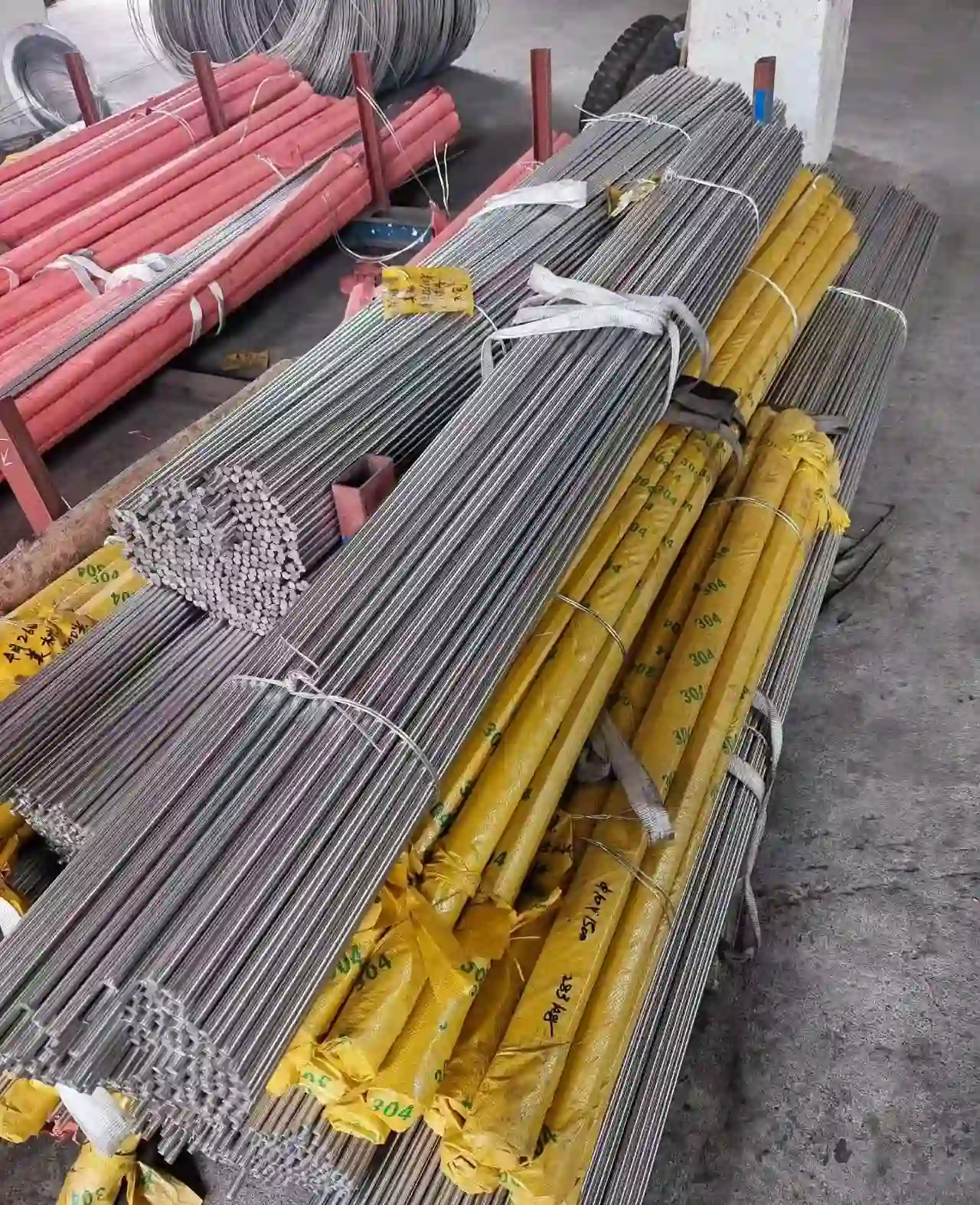
Buyers choose peeled bar when the diameter must be consistent without relying on their own roughing pass, or when the bar feeds into polishing, plating or straight-to-CNC work. Diameter tolerances on peeled bar are commonly specified in the h9 to h11 range, tightened further by agreement for critical work. Peeling also removes surface defects, so it is the usual route when the oxide layer itself is the problem — after hot rolling, the outer layer is where rolled-in scale and pits live.
Bright and cold drawn bar
Bright bar is the umbrella term buyers use for bar with a bright, finish-quality surface. The common route behind it is cold drawing: pulling prepared bar through a carbide die at room temperature, which controls diameter tightly, improves surface, and adds slight strength from cold work. For small and medium diameters, cold drawing is usually the most economical way to hold h9 or h10 tolerance; larger diameters are more often peeled because drawing them adds cost without much benefit.
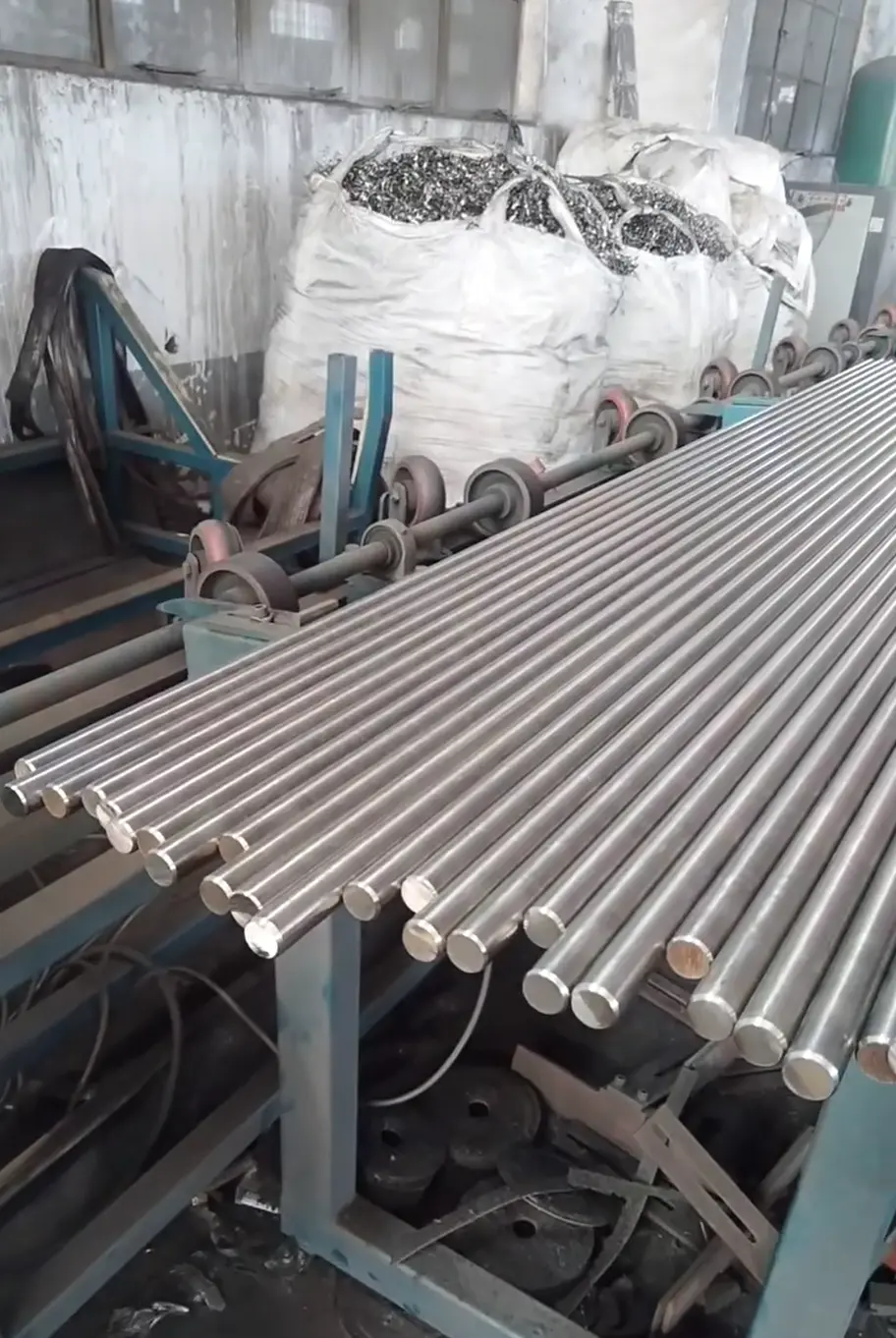
The full walk-through of that route, from parent bar to die to straightening, is covered in our cold drawn bar production guide, and the peeled vs cold drawn comparison goes deeper on choosing between the two machined routes.
The three routes side by side
| Route | Surface | Diameter tolerance | Best suited to | Relative cost per ton |
|---|---|---|---|---|
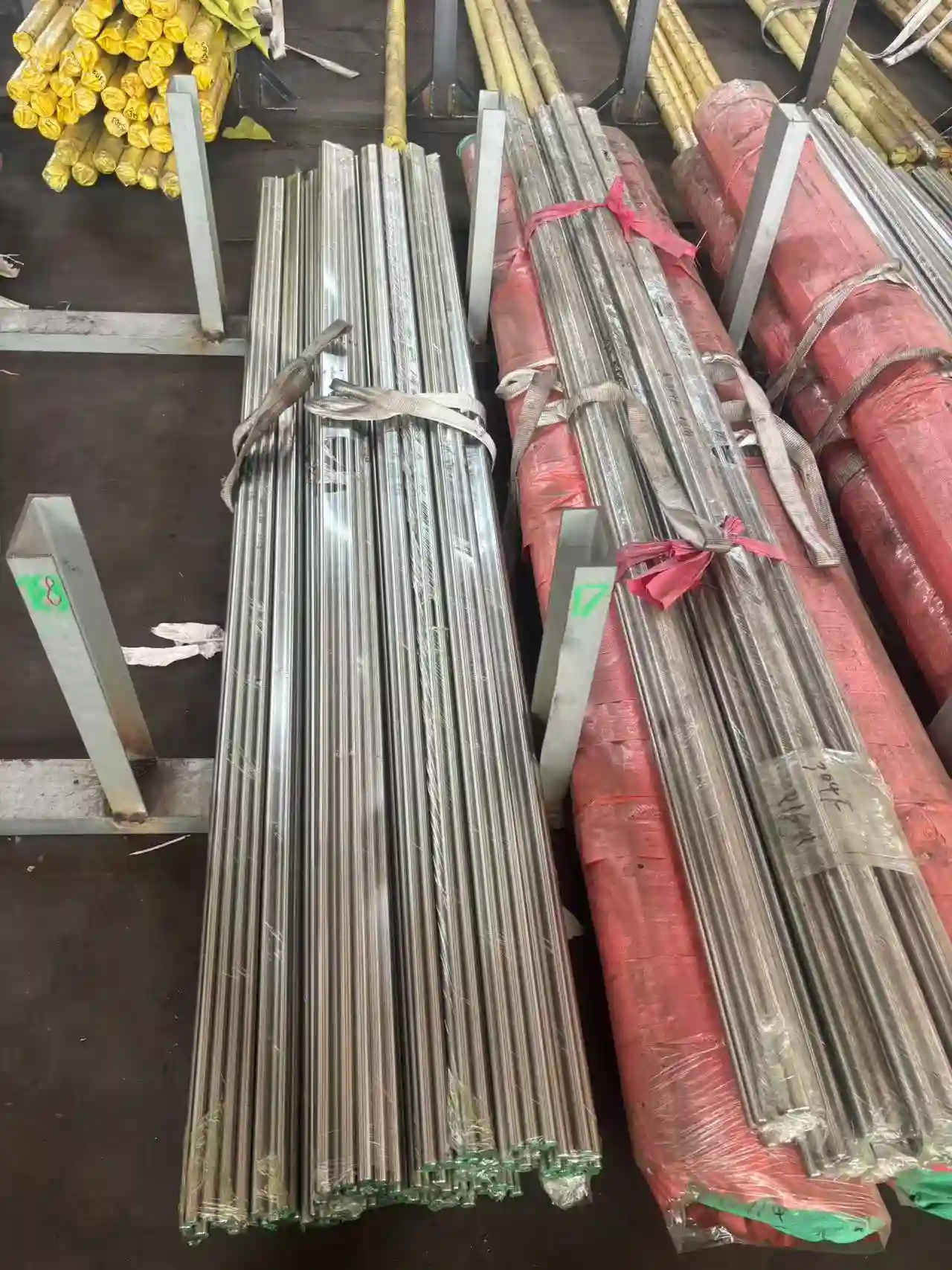
| Black bar (hot rolled / forged) | Oxide scale, visible rolling marks | Widest of the three | Forging blanks, rough machining, further processing | Lowest |
| Peeled bar | Machined, scale-free, consistent | Commonly h9 to h11 | Polishing and plating stock, machining blanks, larger diameters | Middle |
| Bright / cold drawn bar | Bright, die-smooth | Tightest, commonly h9 or h10 | Direct CNC feeding, small and medium diameters, visible surfaces | Highest |
Costs move in that order for a simple reason: each route adds processing to the previous one. What matters for the buyer is where in that chain the value lands for their part.
Price, weight and the machining allowance
Cutting and turning change how the material is billed, and the same logic applies here as in any machined bar order:
- Theoretical or actually weighed. Black bar on theoretical weight can hand you a bill that includes diameter you will machine off. If that matters for the job, ask for actual weights per bundle on the packing list.
- The allowance belongs to someone. A black bar quote looks cheapest until your workshop spends turning time removing scale and diameter spread. Peeled and drawn quotes include that step at the mill, where it is a production pass instead of your machine hours.
- Small diameters shift the logic. Drawing small bar is cheap and effective; peeling it is not. This is why the practical route depends on the diameter, not on a fixed preference.
MTC and heat number along the route
The heat identity survives every stop on this chain. A bar that is rolled, then peeled or drawn, then cut, still belongs to the same heat — and the 3.1 MTC should say so.
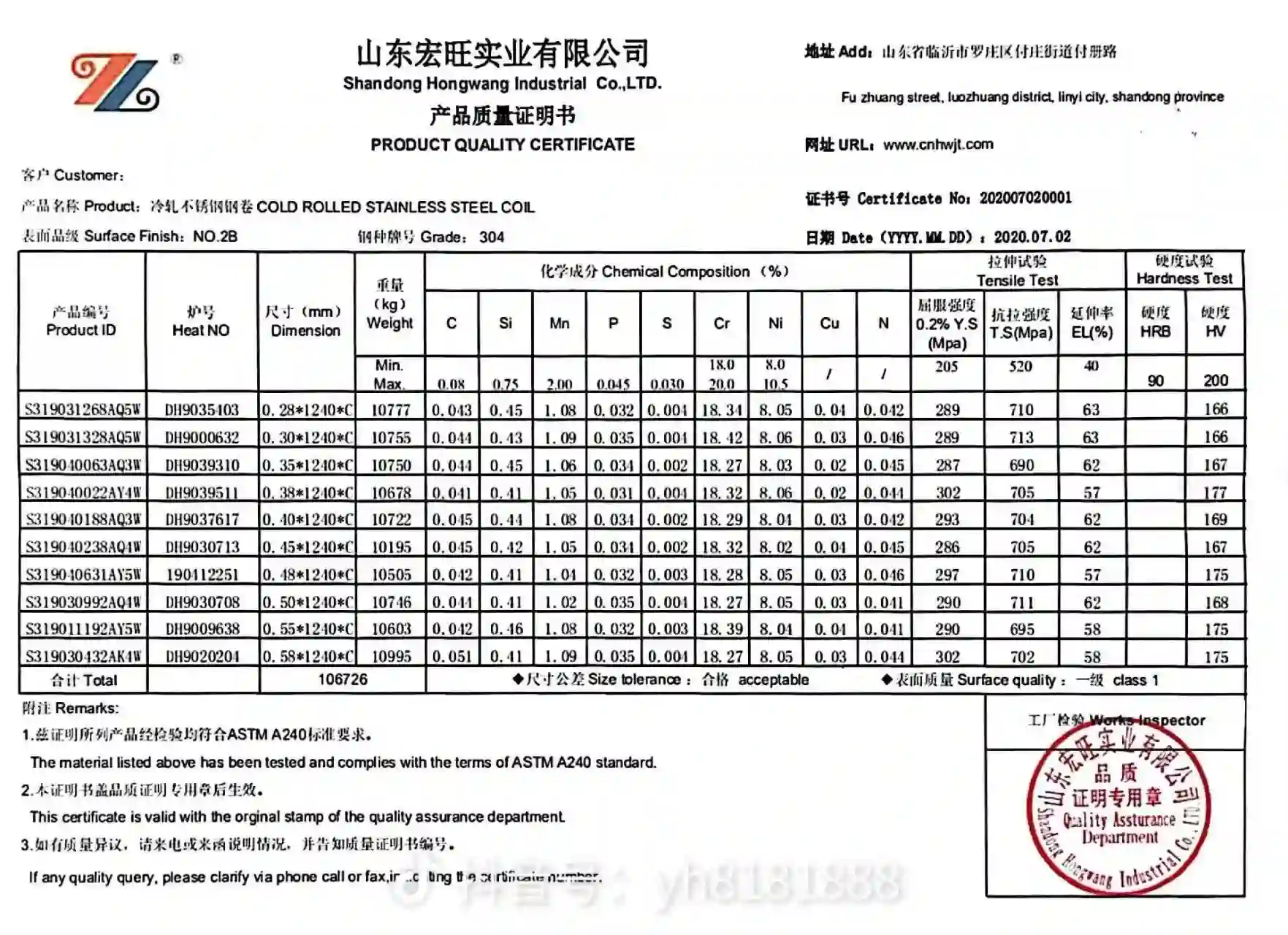
Two checks keep the chain intact. First, the certificate's product description should match what you actually ordered — if the PO says peeled bar, the paperwork should not describe an unspecified hot-rolled bar. Second, the heat number on the tag should trace back to the MTC and forward to the packing list, the same chain we describe in the MTC checklist before shipment.
How to write the route into an RFQ
The route is one line in the RFQ, and it decides most of the quote:
Please quote stainless steel round bar, 304, ASTM A276, 80 mm diameter, peeled bar with h10 diameter tolerance, random lengths, MTC EN 10204 3.1 with heat number tagged per bundle, ISPM 15 packing, CFR Laem Chabang.
Swap the bolded route for black bar or cold drawn bar, set the tolerance honestly (h11 for rough blanks, h9 where the CNC needs it), and the quotes that come back will be comparable because they describe the same work.
Frequently asked questions
Q. What is black stainless steel bar?
A. Black bar is hot-rolled or forged stainless steel bar that keeps its oxide-covered surface, which gives it the dark name. It carries the widest diameter tolerance of the common bar routes and is the starting stock for peeled, bright and cold drawn bar.
Q. Is black bar cheaper than peeled or bright bar?
A. Yes, per ton black bar is usually the cheapest route because no machining or drawing has been added yet. Whether it stays cheaper depends on what happens after delivery: if your workshop must remove the oxide layer and diameter spread itself, the machining cost can eat the saving.
Q. Can black bar be machined directly?
A. Yes, for rough blanks, forged parts and components where the surface is machined away anyway. For visible surfaces, plating, or CNC work that needs a consistent diameter, peeled or cold drawn bar is usually the better starting point.
Q. Does peeled bar keep the MTC of the parent bar?
A. Yes, provided the order asks for it. Peeling removes surface material, not the heat identity. The 3.1 MTC follows the heat, and the peeled bar should carry the same heat number through tags, labels and the packing list.
Q. Which route should I order for CNC parts?
A. It depends on diameter and tolerance. Small and medium diameters with h9 or h10 tolerance usually suit cold drawn bar, while larger diameters are commonly peeled instead. Send the diameter, tolerance and surface requirement and the quotation can name the practical route.
Conclusion
Black bar, peeled bar and bright bar are not three products competing for the same job — they are three stops on one production route, and the right stop depends on how much machining your side will do and how tight the diameter must be. Say the route, the tolerance and the weight basis in the RFQ, and the quote you get back will be one you can build on.
Tell us the grade, diameter, tolerance and what the bar feeds into, and we will confirm the practical route with the quotation. For the machined routes, start from the stainless steel peeled bar page or the cold drawn bar page, and the full bar product range lists every shape and grade we supply.