
How to Buy Stainless Steel Bars from China Without Costly Mistakes
Learn how experienced buyers source stainless steel bars from China by checking real diameter, tolerance, standards, MTC, weight basis, freight terms and surface finish before accepting a quote.
In This Guide
- Introduction
- Quick Answer: 6 Questions to Ask Before Accepting a Quote
- Mistake 1: Only Asking for Nominal Diameter
- Mistake 2: Asking for 304 or 316 Without Standard Wording
- Mistake 3: Not Checking the MTC Before Bulk Order
- Mistake 4: Not Confirming Theoretical Weight vs Actual Scale Weight
- Mistake 5: Comparing Prices Without Freight Basis
- Mistake 6: Ignoring Surface Finish and Processing Route
- Copy-Ready RFQ Template
- Supplier Reply Check Table
- How FX Stainless Steel Reviews Bar Inquiries
Introduction
A stainless steel bar supplier can usually tell whether an inquiry is complete within the first few questions.
If you only ask for "20 mm stainless steel round bar price," you may receive a number, but the quote may not match the material you actually need. Nominal size is only one part of the order. Real comparison depends on actual diameter, tolerance, standard, surface finish, weight basis, MTC traceability, packing and freight terms.
This guide is written for engineers, CNC machining buyers and procurement teams who want to buy stainless steel bars from China with fewer specification gaps before quotation.
The goal is simple: ask clearer questions, compare supplier replies on the same basis and reduce the room for unclear quotation wording.
Quick Answer: 6 Questions to Ask Before Accepting a Quote
Before you compare price, ask these questions:
| Loose Inquiry | Better Buyer Question |
|---|---|
| How much is 20 mm stainless steel bar? | What is the actual diameter range and tolerance, such as h9, h10 or h11? |
| Is it 304 or 316? | Which standard applies: ASTM A276, ASTM A479 / ASME SA479, JIS, EN or GB? |
| Can you provide certificate? | Can you send a sample MTC with heat number, chemistry and product description? |
| What is the unit price? | Is the quote based on theoretical weight or actual scale weight? |
| Is freight included? | What is the delivered cost to my port, warehouse or factory area? |
| Is the bar bright? | Is it hot rolled, cold drawn, peeled, polished or centerless ground? |
These questions change the conversation. A capable supplier should answer them clearly or explain what still needs to be checked.
Mistake 1: Only Asking for Nominal Diameter
Nominal diameter is not enough.
A buyer may ask for 20 mm stainless steel round bar, but the actual bar may not measure exactly 20.000 mm. Depending on the production route and tolerance grade, the actual diameter can be slightly smaller or larger within an allowed range.
For CNC machining, shaft work, bearing seats and bar-feeding machines, that difference matters.
Ask this instead: For 20 mm stainless steel round bar, please confirm the actual diameter range, tolerance grade and straightness. Is h9, h10 or h11 available for this size?
This tells the supplier you are not only buying metal by name. You are buying material that must work in a process.
For tighter machining jobs, h9 tolerance stainless steel bar or centerless ground bar may be needed. For general fabrication, h10 or h11 may be enough. Paying for h9 when the part does not need it can waste money. Buying loose tolerance when the CNC line needs stable feeding can cost even more later.
For detailed tolerance data, use the related guide: h9, h10 and h11 stainless steel bar tolerance chart.
Mistake 2: Asking for 304 or 316 Without Standard Wording
Grade name is important, but it is not the whole specification.
A supplier may say the material is 304 or 316L. That does not automatically tell you which standard, product form or document wording will appear on the Mill Test Certificate.
For stainless steel bar sourcing, buyers often need to confirm standards such as:
- ASTM A276 stainless steel bar for general stainless steel bars and shapes
- ASTM A479 / ASME SA479 for pressure-related or more specification-driven bar review
- JIS G4303 for Japanese standard bar wording
- EN 10088-3 for European stainless steel bar references
- GB/T 1220 or accepted China standard wording where applicable
Ask this instead: Please quote 304 stainless steel round bar, ASTM A276, 20 mm diameter, cold drawn or peeled finish, MTC required. If ASTM A479 / ASME SA479 is more suitable for this project, please note the difference.
This kind of inquiry gives the supplier a real standard path to review.
If your project involves valves, pressure-related parts, oil and gas components or strict end-user documents, do not assume ASTM A276 is enough. Check whether ASME SA479 or ASTM A479 is required by the drawing or purchase order.
For more detail, read: ASTM A276 vs ASTM A479 / ASME SA479 stainless steel bar guide.
Mistake 3: Not Checking the MTC Before Bulk Order
A serious stainless steel bar order should not rely only on a quotation sheet.
Ask for a sample MTC EN 10204 3.1 or mill certificate format before placing a bulk order. The certificate helps you confirm whether the supplier's words match the material batch.
At minimum, check:
| MTC Item | What to Look For |
|---|---|
| Grade | 304, 316L, 303, 430, duplex or another requested grade |
| Standard | ASTM, JIS, EN, GB or project-required wording |
| Heat number | Must connect certificate, labels and physical material |
| Chemical composition | Confirms grade chemistry and key elements |
| Mechanical data | Needed when the standard or project requires it |
| Product description | Bar form, size and condition should make sense |
| Supplier / mill information | Helps document traceability |
Ask this instead: Before bulk order confirmation, please send a sample MTC showing grade, standard, heat number, chemical composition and product description. The heat number must match the bar labels and packing list.
That sentence alone filters out a lot of careless supplier replies.
If you are not sure how to read the document, use this guide: How to read a stainless steel MTC.
Mistake 4: Not Confirming Theoretical Weight vs Actual Scale Weight
This is one of the quiet ways quotes become confusing.
In stainless steel bar trading, price may be calculated by theoretical weight or by actual scale weight.
Theoretical weight is calculated from size, length, density and quantity. Actual weight is measured by scale. For large orders, the difference can affect the final payable amount.
Neither method is automatically wrong. The problem is when the buyer does not know which one the quote uses.
Ask this instead: Please confirm whether the quotation is based on theoretical weight or actual scale weight. If actual scale weight is used, please state how final settlement will be handled.
For bulk orders, actual scale weight can be more transparent. For early budget review, theoretical weight is useful. The key is to compare suppliers on the same basis.
You can estimate bar weight before quotation with the stainless steel bar weight calculator.
Mistake 5: Comparing Prices Without Freight Basis
Two suppliers may quote the same stainless steel bar price, but the final cost can still be very different.
One quote may be EXW factory. Another may include inland trucking to Shanghai or Ningbo port. Another may include export packing and FOB charges. Another may offer CIF to your destination port.
If you only compare the material unit price, you may miss local logistics, port fees, packing cost or delivery responsibility.
Ask this instead: Please quote FOB Shanghai or Ningbo, including export seaworthy packing, inland trucking and port handling. Also provide CIF price to my destination port if available.
If you need delivery to a factory area, be even clearer: Please also estimate delivered cost to our factory area, including local freight assumptions if possible.
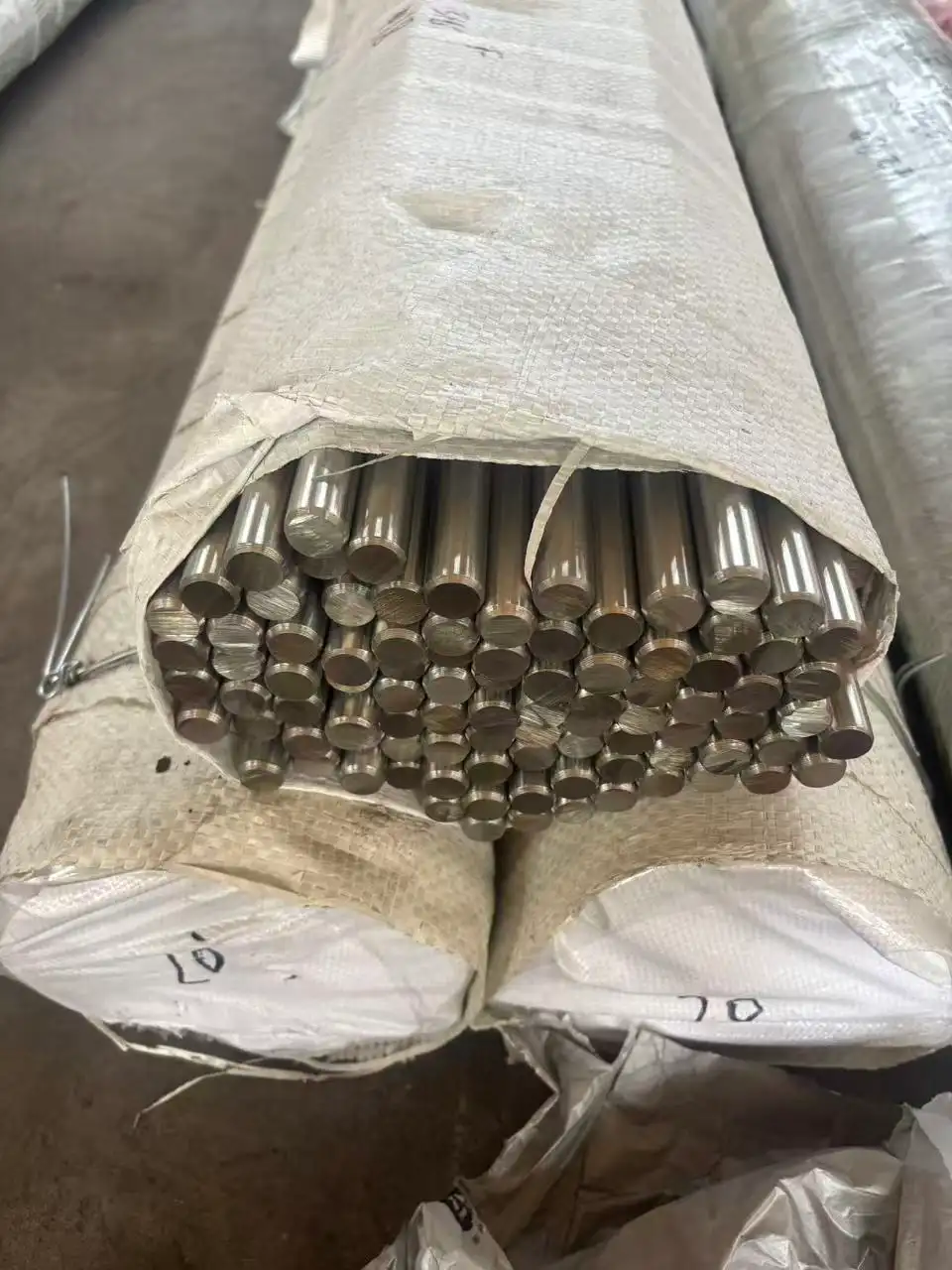
For stainless steel bars, packing matters. Long bars may need bundles, waterproof wrapping, wooden cases, PVC protection or end protection depending on size, finish and destination.
A cheap-looking quote before freight may become expensive after delivery.
Mistake 6: Ignoring Surface Finish and Processing Route
A stainless steel bar is not just a grade and a diameter.
The production route affects price, tolerance, surface and machining behavior.
Common options include:
| Surface / Route | Typical Use | Buyer Check |
|---|---|---|
| Hot rolled bar | General fabrication, larger sizes, machining stock | More machining allowance may be needed |
| Cold drawn bar | Better size control and surface than hot rolled | Check tolerance and straightness |
| Peeled bar | Removes surface defects and improves roundness | Useful for machining stock |
| Polished bar | Better appearance and smoother surface | Confirm grit / finish expectation |
| Centerless ground bar | Precision shafts, CNC feeding, tighter tolerance | Confirm h9 or required tolerance |
Ask this instead: Please confirm whether the bar is hot rolled, cold drawn, peeled, polished or centerless ground. Also confirm the achievable tolerance and straightness for this size.
This is especially important for CNC workshops. A cheaper hot rolled bar may need more machining. A more expensive ground bar may reduce cutting time, rejection risk and feeding problems.
The lowest material price is not always the lowest finished-part cost.
Copy-Ready RFQ Template
If you want a useful quotation, send a complete RFQ.
You can use this format:
Please quote stainless steel round bar, grade 304 / ASTM A276, diameter 20 mm, length 3 meters, h10 tolerance or better, peeled or cold drawn finish, quantity 1,000 kg, MTC EN 10204 3.1 required, heat number traceability required. Please confirm whether the price is based on theoretical weight or actual scale weight. Quote FOB Ningbo and CIF Ho Chi Minh City. Please include packing method, estimated lead time and available stock condition.
For hex bar, square bar or flat bar, replace diameter with across-flats size, side size, thickness or width.
For pressure-related projects, replace ASTM A276 with the required standard wording, such as ASTM A479 / ASME SA479, if your drawing or end user requires it.
Supplier Reply Check Table
Use this table when reviewing replies from a stainless steel bar supplier China search.
| What You Ask | Good Supplier Answer | Warning Sign |
|---|---|---|
| Actual diameter and tolerance | Gives h9 / h10 / h11 or actual measured range | Only repeats nominal size |
| Standard | Confirms ASTM, JIS, EN, GB or project wording | Says standard quality without detail |
| MTC | Can send sample certificate and heat number logic | Certificate is vague or delayed |
| Weight basis | States theoretical or actual scale weight clearly | Unit price looks cheap but settlement is unclear |
| Freight term | Separates EXW, FOB, CIF or delivered cost | Freight and packing are mixed vaguely |
| Surface finish | Confirms hot rolled, cold drawn, peeled or ground | Says bright without process detail |
| Stock condition | Gives size, quantity, finish and lead time | Promises everything without checking |
Good buying is not about asking more questions for the sake of it. It is about asking the few questions that expose whether the supplier actually controls the order.
How FX Stainless Steel Reviews Bar Inquiries
At FX Stainless Steel, we prefer clear inquiries because they make the quotation more useful.
For stainless steel bar orders, we usually review:
- grade and accepted standard
- bar shape and size
- tolerance and straightness requirement
- surface or processing route
- MTC and heat number traceability
- weight basis for quotation
- packing and delivery term
- destination port or delivery area
If a buyer only asks for 304 round bar price, we can still reply. But the better result comes when the buyer sends the real use case, drawing requirement and delivery condition.
You can review the broader product range on our stainless steel bar product page, or send a direct RFQ through the stainless steel bar quote page.
Conclusion
If you want to source stainless steel bar from China without costly mistakes, do not start and stop with grade and nominal size.
Ask about actual diameter, tolerance, standard, MTC, weight basis, freight term and surface finish. These details decide whether the quote is real, comparable and usable.
A capable supplier should be able to answer these questions or explain what still needs to be checked.
Sources
Public references for this guide are limited to standards bodies and official trade-rule publishers: ASTM A276/A276M stainless steel bars and shapes, ASTM A479/A479M stainless steel bars for boiler and pressure vessel applications, ISO 286-2 tolerance classes and limit deviations for holes and shafts, JIS G 4303 stainless steel bars from the Japanese Standards Association, NBN EN 10204 metallic products inspection documents, NBN EN 10088-3 stainless steel bars, rods, wire and sections, and ICC Incoterms 2020 rules.
Frequently Asked Questions
Q. Is nominal diameter the same as actual diameter for stainless steel bar?
A. No. Nominal diameter is the named size, while actual diameter may vary within the allowed tolerance range. For CNC machining or shaft work, buyers should confirm h9, h10, h11 or drawing tolerance before ordering.
Q. Is GB standard always worse than ASTM or EN?
A. Not necessarily. The important question is which standard your project, drawing or end user accepts. ASTM, EN, JIS and GB wording can all be valid in the right context, but the MTC and purchase order should match the accepted requirement.
Q. Should I buy stainless steel bar by theoretical weight or actual scale weight?
A. Both methods are used. Theoretical weight is useful for estimating cost. Actual scale weight can be more transparent for bulk settlement. The key is to confirm the basis before comparing quotes.
Q. What should I check on a stainless steel bar MTC?
A. Check grade, standard, heat number, chemical composition, mechanical data if required, product description and whether the heat number matches labels and packing documents.
Q. Is FOB price enough for comparing stainless steel bar suppliers?
A. FOB is useful, but make sure it includes the same items across quotes, such as inland trucking, export packing and port handling. If destination cost matters, ask for CIF or delivered-cost review as well.
CTA
Send your grade, shape, size, tolerance, standard, weight basis, quantity and destination port to FX Stainless Steel. We can help review whether the stainless steel bar quote is practical before you place the order.