Stainless Steel Surface Finish Guide for Buyers: How to Get Exactly What You Pay For
A practical stainless steel surface finish guide for buyers comparing 2B, BA, No.4, HL, No.8 mirror and patterned finishes before confirming an RFQ or purchase order.
In This Guide
- Introduction
- Quick Answer: Stainless Steel Finish Cheat Sheet
- Why Finish Mistakes Cause Immediate Rejection
- 2B vs BA: The Common Cold Rolled Finish Trap
- No.4 vs HL: Same Directional Idea, Different Visual Result
- No.8 Mirror and Patterned Finish: Higher Visual Risk
- How to Write Surface Finish in an RFQ and PO
- The MTC Trap: Why Documents Alone Are Not Enough
- Pre-Shipment Inspection Checklist
- Packing and Sea Freight Risk
- How FX Stainless Steel Reviews Finish Inquiries
Introduction
If a buyer orders the wrong stainless steel grade, the problem may not show up until the part is used in the wrong environment. But if the stainless steel surface finish specification is wrong, the problem is visible as soon as the container opens.
A dull sheet arrives where a bright panel was expected. The grain direction does not match the drawing. The protective film leaves marks on a mirror panel. The warehouse team sees mixed finishes in the same batch. These are not small cosmetic complaints. They can cause immediate rejection, urgent rework, delayed installation and commercial claims.
This guide is written for buyers who need to specify stainless steel sheet, plate or coil clearly before placing an order. It explains the practical differences between 2B finish stainless steel, BA finish stainless steel, No.4 finish stainless steel, HL finish stainless steel, No.8 mirror finish stainless steel and patterned surfaces.
Quick Answer: Stainless Steel Finish Cheat Sheet
If you are preparing an RFQ and need a fast reference, start here. The best finish is not the most expensive one. It is the finish that matches the final use, inspection method and buyer expectation.
| Finish | Common buying name | How it looks | Typical buying use |
|---|---|---|---|
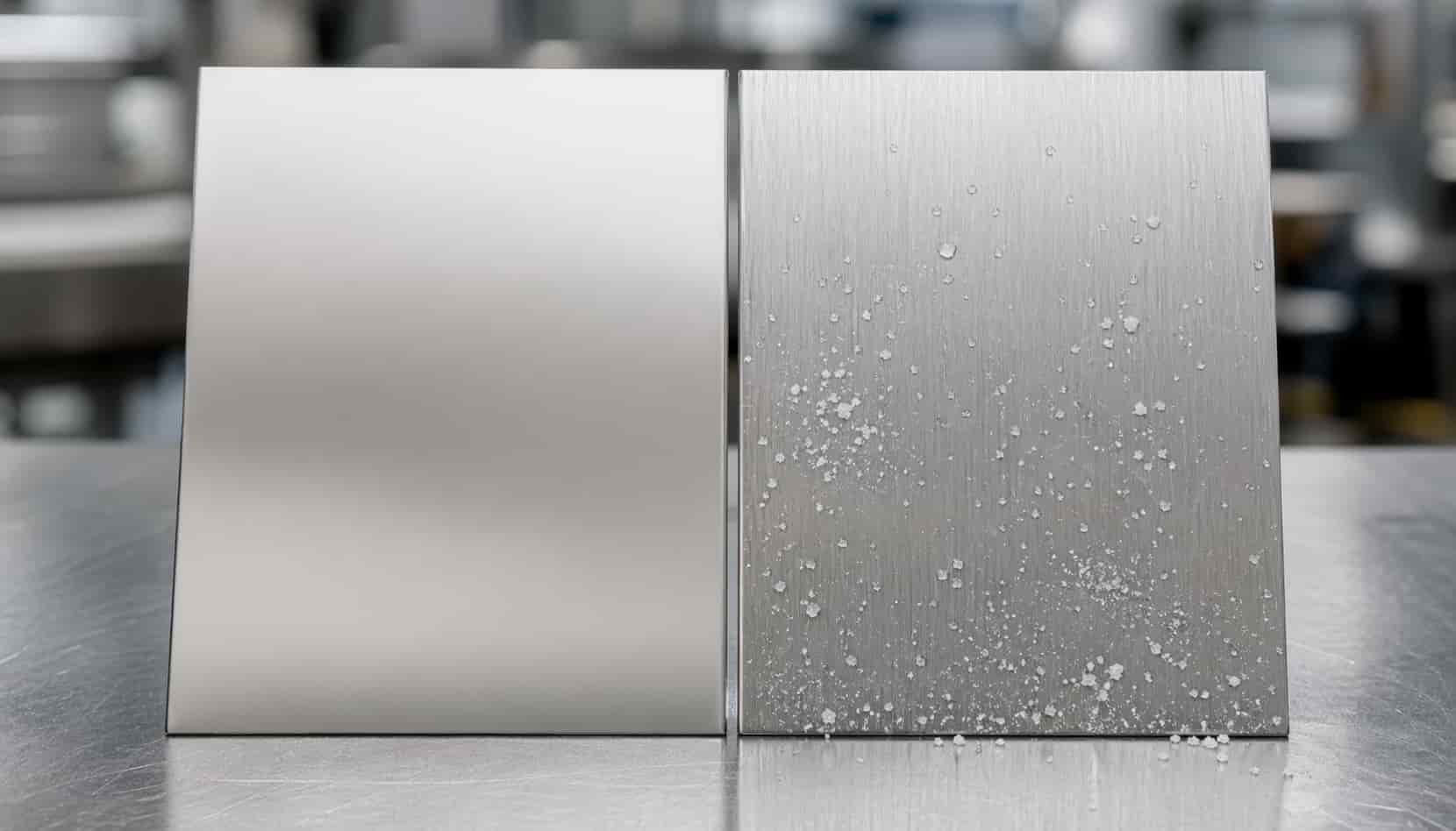
| 2B | Standard cold rolled finish | Smooth, matte, grey-white | Tanks, machine panels, industrial parts, general sheet work |
| BA | Bright annealed finish | Bright and reflective, but not a true mirror | Kitchenware, appliance trim, decorative light-duty parts |
| No.4 | Brushed or satin finish | Short, uniform linear polishing marks | Commercial kitchens, elevators, food equipment, visible panels |
| HL | Hairline finish | Long, continuous fine lines | Architectural panels, door frames, shopfitting, premium trims |
| No.8 | Mirror finish | Deep reflection with no obvious polishing line | Interior decoration, mirror panels, luxury trim, marine decorative use |
| Embossed / patterned | Raised or textured finish | Diamond, linen, teardrop or other patterns | Anti-slip flooring, decorative panels, elevator and wall cladding |
For normal industrial use, 2B or No.1 may be enough. For visible panels, No.4 or HL usually needs clearer wording. For mirror or patterned material, inspection and packing become just as important as the finish name.
Why Finish Mistakes Cause Immediate Rejection
Surface finish is one of the first things a buyer, fabricator or end customer can judge without a test machine. That is why finish mistakes create fast disputes.
For example, a commercial kitchen fabricator may accept 304 chemistry, correct thickness and clean MTC records, but still reject the batch if the No.4 brushing is uneven. An elevator project may not allow panels with different grain directions. A decorative mirror panel may be technically stainless steel, but commercially useless if the surface has adhesive shadow, small dents or handling scratches.
The key point is simple: stainless steel surface finish is both a technical and visual requirement. It should not be left as a vague comment in an email.
2B vs BA: The Common Cold Rolled Finish Trap
Many buyers group 2B and BA together because both are common cold rolled finishes. In real purchasing, they are very different.
2B finish stainless steel is the standard cold rolled finish for many sheet and coil orders. The steel is cold rolled, annealed, pickled and lightly passed through polished rolls. The surface is smooth but matte. It is practical when the material will be fabricated, welded, painted, hidden inside equipment or used where appearance is not the main selling point.
BA finish stainless steel means bright annealed. The material is annealed in a controlled atmosphere so the surface stays bright and reflective. It is used where the buyer wants a cleaner visual surface before further fabrication or light polishing.
The trap is substitution. If the drawing or end customer expects BA, a 2B sheet may look too dull. If the part is hidden inside equipment, paying for BA may not add value. Buyers should specify the finish according to the final visible surface, not only by grade.
For plate and sheet orders, you can review the broader supply route on our stainless steel plate page or compare common flat products such as 304 stainless steel plate and 316 stainless steel plate.
No.4 vs HL: Same Directional Idea, Different Visual Result
No.4 and HL are often confused because both are directional polished finishes. They are not the same in appearance or processing expectation.
No.4 finish stainless steel usually has short, uniform brushing lines. It is widely used for commercial kitchen equipment, food processing machinery, elevator interiors, appliance panels and other visible surfaces that need a practical satin look. It hides small handling marks better than a mirror finish and is easier to maintain in daily use.
HL finish stainless steel, or hairline finish, has longer and more continuous lines. The surface looks cleaner and more architectural. It is common for door frames, interior panels, retail decoration and projects where panels sit next to each other and the grain direction must look consistent.
For both finishes, the buyer should confirm grain direction. A panel polished lengthwise can look wrong when installed next to a panel polished crosswise. This is why RFQ wording should include direction, protective film and inspection requirement, not only the finish name.
No.8 Mirror and Patterned Finish: Higher Visual Risk
No.8 mirror finish stainless steel is not simply a shiny BA sheet. It is a mechanically polished surface with a deeper reflection and no obvious grit lines. Because the surface is highly visible, it also shows defects quickly.
Mirror finish buyers should pay close attention to handling, film quality, sheet separation, packing and moisture control. A small scratch, adhesive mark or cloudy area can turn a technically correct sheet into a commercial complaint.
Patterned or embossed finishes have a different purpose. They may improve slip resistance, hide fingerprints or create a decorative effect. Common patterns include diamond, linen and teardrop styles. For these orders, buyers should confirm the pattern type, direction, base grade, thickness and whether the pattern affects final usable thickness or forming behavior.
If the order starts from coil and then moves through slitting, cutting or polishing, it is also useful to review the stainless steel coil supply route before confirming the processing plan.
How to Write Surface Finish in an RFQ and PO
The safest way to avoid finish disputes is to write the surface requirement as a separate line item in both the RFQ and purchase order.
A weak inquiry says:
304 stainless steel sheet, 1.5 mm, brushed surface, quote best price.
A better inquiry says:
ASTM A240 304 stainless steel sheet, 1.5 mm x 1219 mm x 2438 mm, No.4 finish, grain along length, PVC or laser protective film required, 5 tons, destination Thailand. Please confirm MTC, packing method and pre-shipment surface inspection.
For a mirror finish order, write more detail:
SUS304 stainless steel sheet, 0.8 mm x 1219 mm x 2438 mm, No.8 mirror finish, one side mirror with protective film, wooden case packing, no visible scratch or adhesive mark before shipment, destination Singapore.
For a hairline order, include direction:
316L stainless steel sheet, 1.2 mm x 1219 mm x 2438 mm, HL finish, grain direction along 2438 mm length, film required, panels for interior decoration.
These details help the supplier quote the actual processing route. They also give both sides a clearer inspection basis if a claim happens later.
The MTC Trap: Why Documents Alone Are Not Enough
An MTC is important, but it is not a complete surface finish inspection report.
A normal stainless steel MTC usually confirms grade, chemical composition, mechanical properties, heat number, product form and standard wording. It helps prove that the material is 304, 316L or another ordered grade. It does not always prove that a secondary processing center polished the final sheet to No.4, HL or No.8 mirror quality.
That is why surface finish must be controlled through the purchase order, supplier confirmation, photos or video when needed, and pre-shipment inspection. If finish is critical, ask the supplier how the finish will be produced, what protective film will be used and how the material will be packed.
For a broader sourcing checklist on thickness, surface, MTC and export packing, read our related guide on buying stainless steel plate from China.
Pre-Shipment Inspection Checklist
Before loading, buyers or third-party inspectors should check more than labels and packing lists. For visible stainless steel surfaces, inspect the material under practical lighting.
Use this checklist:
| Check item | What to verify | Why it matters |
|---|---|---|
| Finish name | 2B, BA, No.4, HL, No.8 or patterned finish matches PO | Prevents wrong processing route |
| Grain direction | Direction is consistent across sheets or panels | Avoids visual mismatch after installation |
| Surface defects | Scratches, dents, pits, cloudy marks, stains or adhesive shadow | Prevents rejection at buyer warehouse |
| Protective film | Film type, adhesion and coverage | Protects visible surface during handling and shipping |
| Batch consistency | Same visual appearance across bundles | Reduces mixed-lot disputes |
| Labels and MTC | Heat number and grade records match documents | Supports traceability |
For weight and freight planning, buyers can also use the stainless steel plate weight calculator before confirming shipment quantity.
Packing and Sea Freight Risk
Surface finish problems can happen after production if the packing is weak. This is especially true for polished, mirror or decorative sheets shipped by sea.
Moisture, salt air, long transit time and container temperature changes can affect the protective film and exposed edges. Poor film may leave adhesive residue. Weak wooden packing may allow sheets to rub against each other. Dirty handling can create scratches before the buyer even receives the cargo.
For high-visibility surfaces, ask for clear packing wording:
- protective film on the visible side
- paper or plastic separation where required
- strong wooden case or pallet suitable for export
- edge protection for cut sheets
- moisture control for long sea routes where practical
- photos before packing and after packing when the finish is critical
The right packing does not make a bad finish good, but poor packing can damage a good finish.
How FX Stainless Steel Reviews Finish Inquiries
When FX Stainless Steel reviews a surface finish inquiry, we do not look only at grade and price. We also check whether the finish wording is clear enough for production and inspection.
For sheet, plate and coil inquiries, useful details include:
- grade: 304, 304L, 316, 316L, 201, 430 or other grade
- standard wording if required: ASTM, EN, JIS or buyer drawing
- thickness, width, length or coil size
- required surface finish: 2B, BA, No.4, HL, No.8, embossed or patterned
- grain direction for No.4 and HL
- protective film requirement
- quantity and tolerance expectation
- destination country, port or warehouse
- visible application or fabrication process
If the application is visible, we may ask extra questions before quoting. That is not delay. It is how finish disputes are avoided before the order starts.
Conclusion
A stainless steel surface finish specification should be treated like grade, thickness and tolerance. It belongs in the RFQ, purchase order and inspection plan.
For hidden industrial parts, a standard 2B or No.1 surface may be enough. For appliance, elevator, kitchen, architectural or decorative work, the buyer should be more precise: No.4 or HL direction, mirror finish handling, protective film, packing and inspection all matter.
The safest buying habit is simple: describe what the final user must see, not only what the mill calls the finish.
Frequently Asked Questions (FAQ)
Q. What is the difference between 2B finish stainless steel and BA finish stainless steel?
A. 2B finish stainless steel has a smooth matte grey surface after cold rolling, annealing, pickling and a light skin pass. BA finish stainless steel is bright annealed in a controlled atmosphere, so it looks much more reflective. They may share the same grade and chemistry, but they are not interchangeable for visible panels or appliance parts.
Q. Can an MTC confirm the final stainless steel surface finish specification?
A. Usually not by itself. An MTC normally confirms grade, chemistry, mechanical data, heat number and standard wording. If No.4, HL or No.8 mirror finish is added by a secondary polishing center, the final finish requirement should be written clearly in the RFQ, purchase order, inspection note and packing requirement.
Q. How should I write No.4 or HL finish in a stainless steel RFQ?
A. Write the grade, thickness, size, finish name, grain direction, protective film, quantity, destination and inspection requirement. For example: ASTM A240 304 stainless steel sheet, 1.5 mm x 1219 mm x 2438 mm, No.4 finish, grain along length, PVC or laser film required, 5 tons, destination Thailand.
Q. Is No.8 mirror finish stainless steel safe for sea freight?
A. Yes, but it needs careful packing. Mirror finish sheets should use suitable protective film, clean surface handling, moisture control, strong wooden packing and enough separation between sheets. For humid sea routes, poor film or weak packing can cause scratches, adhesive marks or cloudy surface problems.
CTA
Send your grade, thickness, width, length, required surface finish, grain direction, protective film, quantity and destination through the contact page. FX Stainless Steel can review the practical surface finish route before quotation.