
Solution Annealed and Centerless Ground Stainless Steel Bar: What Buyers Should Specify
A practical buyer guide to solution annealed and centerless ground stainless steel bars, covering 304/316L heat treatment, h8-h10 tolerance, CNC machining use and Tsingshan-origin stock.
In This Guide
- Introduction
- Quick Answer
- What Solution Annealing Does
- What Centerless Grinding Changes
- Why This Combination Matters for CNC Machining
- Typical Grades, Tolerances and Applications
- Why Heat Treatment Usually Comes Before Final Grinding
- How to Specify the Bar in an RFQ
- Tsingshan-Origin Stock and Processing Support
- Common Buying Mistakes to Avoid
Introduction
When a drawing or RFQ calls for solution annealed and centerless ground stainless steel bar, it is not asking for an ordinary round bar.
It is asking for two things to be controlled at the same time: the internal metallurgical condition and the outside diameter accuracy.
For CNC machining shops, shaft manufacturers, valve component producers and precision part buyers, this combination can make a real difference. A bar may look acceptable from the outside, but still create trouble if the heat treatment is unclear, the diameter tolerance is loose, or the straightness is not suitable for bar-fed machining.
This guide explains what solution annealing and centerless grinding mean, why they matter for 304 stainless steel bar and 316L stainless steel bar, and how to specify the material clearly before sending an RFQ.
Quick Answer
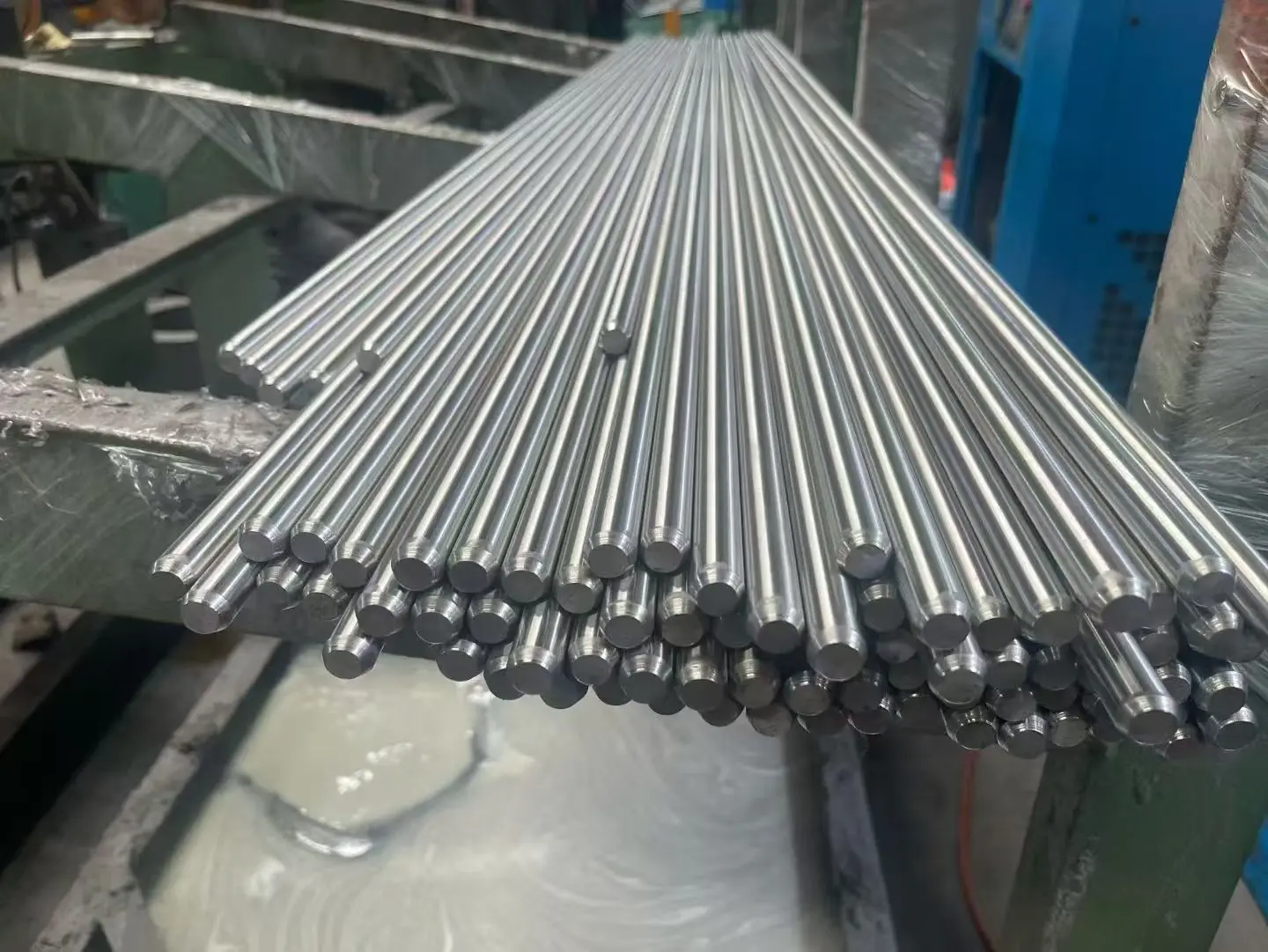
A solution annealed centerless ground stainless steel bar is a stainless round bar that has been heat treated to restore a uniform corrosion-resistant structure, then ground to improve diameter tolerance, roundness, straightness and surface consistency.
It is commonly reviewed for CNC shafts, valve stems, pump parts, guide rods, pins, bushings and other precision machined stainless steel components.
What Solution Annealing Does
Solution annealing is a heat treatment process mainly used for austenitic stainless steels such as 304, 304L, 316 and 316L.
During the process, stainless steel is heated to a high temperature and then cooled rapidly under controlled conditions. The purpose is to dissolve carbides and bring alloying elements, especially chromium and nickel, back into a more uniform solid solution.
That matters because chromium is the key element behind stainless steel corrosion resistance. If chromium carbides form at grain boundaries, the nearby areas can become chromium-depleted. In corrosive service, those weak zones may increase the risk of intergranular corrosion.
For buyers, the practical value is easier to understand than the metallurgical language:
- better corrosion resistance after proper heat treatment
- more uniform material condition from batch to batch
- improved ductility for downstream processing
- reduced internal stress compared with uncontrolled material condition
- more predictable behavior during machining and inspection
For wet, marine, chemical, food processing or high-humidity environments, solution annealing is not just a heat-treatment word on paper. It can affect service life and quality approval.
What Centerless Grinding Changes
Centerless grinding is a precision finishing process used to improve the outside diameter of a round bar.
Compared with rough hot-rolled or black bar, a centerless ground stainless steel bar has a more controlled surface and diameter. Compared with routine cold drawn stock, it can be a better option when the drawing requires tighter tolerance or smoother feeding through CNC equipment.
The process is usually reviewed when buyers care about:
- diameter tolerance such as h8, h9 or h10
- roundness and more stable outside diameter
- better surface finish before final machining
- straightness for rotating or bar-fed processes
- easier feeding in automatic lathes and Swiss-type CNC machines
- lower risk of inconsistent material removal from bar to bar
This is why ground stainless steel bars are often used for shafts, valve stems, pump components, precision pins, bushings, guide rods and bearing-adjacent parts.
Why This Combination Matters for CNC Machining
Many stainless steel buyers focus first on the grade. That is understandable. The grade decides corrosion resistance, strength direction, machinability and document language.
But for machining, the bar condition can be just as important as the grade.
A rough black bar may have scale, surface variation, extra machining allowance and wider dimensional movement. A cold drawn bar may be enough for many routine parts, but it may still not satisfy a tight h tolerance or feeding requirement. A centerless ground bar gives the machinist a more controlled starting point.
For repeat CNC production, this can help with:
- less preparation before final turning
- more stable bar feeding
- lower vibration risk during rotation
- more consistent part size from one bar to the next
- fewer rejected parts caused by stock variation
- less time spent checking and sorting incoming bars
The cheapest raw bar is not always the lowest-cost production input. If the material creates longer setup time, unstable feeding or higher scrap rate, the real cost moves to the machine.
Typical Grades, Tolerances and Applications
Use the table below as a starting point. Final tolerance should still be confirmed by diameter, drawing, machine route and stock availability.
| Grade | Heat Treatment | Surface Finish | Common Tolerance | Typical Applications |
|---|---|---|---|---|
| 304 / UNS S30400 / EN 1.4301 | Solution annealed | Centerless ground | h8, h9, h10 | Pump shafts, food machinery, fittings, guide rods |
| 316L / UNS S31603 / EN 1.4404 | Solution annealed | Centerless ground | h8, h9, h10 | Marine shafts, chemical valves, medical and food processing parts |
| 303 / UNS S30300 | Annealed or cold finished | Centerless ground | h8, h9 | High-speed CNC turned parts, pins, bushings |
| 17-4PH / UNS S17400 / EN 1.4542 | H900, H1025 or H1150 | Centerless ground | h8, h9 | High-strength shafts, oil and gas parts, aerospace-related components |
This table is useful because buyers often search by one word, but purchase by a full condition. For example, 316L is the grade, solution annealed is the heat-treatment condition, centerless ground is the finish route, and h9 is the tolerance target.
Why Heat Treatment Usually Comes Before Final Grinding
For austenitic stainless steel bars, solution annealing is normally reviewed before final precision finishing.
The reason is practical. Heat treatment can affect straightness, surface condition and dimensional stability. If a bar is precision ground first and then heat treated, the final diameter and straightness may no longer match the original requirement.
A typical route for precision austenitic stainless steel bar can look like this:
Hot rolling or forging -> solution annealing -> straightening -> peeling or turning -> centerless grinding -> inspection -> packing
The exact route can change by mill, grade, diameter and buyer requirement. But the purchasing logic is the same: if your final part needs corrosion resistance and machining accuracy, specify both the heat treatment and the outside diameter condition.
How to Specify the Bar in an RFQ
Avoid vague inquiry wording such as: "Need 316 stainless steel bar, good quality."
That does not tell the supplier enough. A useful RFQ should include the actual working conditions.
A better inquiry would be: "316L stainless steel round bar, solution annealed, centerless ground, diameter 20 mm, h9 tolerance, 3000 mm length or cut-to-length, MTC 3.1 required, used for CNC machined valve stems."
When possible, include:
- grade: 304, 304L, 316, 316L, 303, 17-4PH or another requested grade
- standard or accepted grade naming: ASTM, EN, JIS, UNS or buyer drawing
- diameter and length
- tolerance: h8, h9, h10 or drawing tolerance
- heat treatment: solution annealed, annealed, H900, H1025 or another condition
- surface finish: black, peeled, cold drawn, polished or centerless ground
- straightness requirement if it matters
- surface roughness requirement if it matters
- quantity, destination and packing requirement
- MTC, heat number and inspection document requirements
If you are not sure whether h8, h9 or h10 is suitable, send the final part drawing. The tolerance should match the part function and machining route, not only a keyword in the quotation.
Tsingshan-Origin Stock and Processing Support
FX Stainless Steel maintains regular stock of Tsingshan-origin 304 and 316L solution annealed black hot-rolled bars in common sizes. We also keep regular stock of Tsingshan-origin centerless ground stainless steel bars for precision machining demand.
This stock position helps us respond faster when buyers need material for urgent CNC machining projects, shaft production, valve parts or cut-to-length supply. Depending on current availability, bars can be reviewed for centerless grinding, custom-length cutting, packing and export documentation.
We do not treat mill origin as a slogan. For technical buyers, the value is traceability and consistency. The grade, heat number, chemical composition, heat treatment condition, tolerance, surface finish and MTC should all match the purchase requirement.
For regular sizes, flexible MOQ and faster delivery can be discussed based on current stock availability. For tighter tolerances or non-standard diameters, feasibility should be confirmed before the order is placed.
Common Buying Mistakes to Avoid
The most common mistakes happen when the buyer and supplier use the same short words but mean different things.
For example, ground bar may mean different tolerance levels depending on the supplier. Annealed may not always mean properly solution annealed for austenitic stainless steel. Bright bar may describe appearance, but it does not automatically guarantee h9 tolerance.
Before confirming the order, ask these questions:
- Is the bar solution annealed, generally annealed or only cold finished?
- What is the actual diameter tolerance?
- Is the tolerance h8, h9, h10 or a custom drawing tolerance?
- What straightness can be supplied for this diameter and length?
- Is surface roughness measured or only visually checked?
- Can the supplier provide MTC and heat number traceability?
- Is the material from current stock or new processing?
- Does the quoted price include cutting, grinding, packing and document support?
These checks are especially important for automatic lathes, Swiss-type CNC machining, shaft production, valve parts and export projects where document approval matters.
Conclusion
A solution annealed and centerless ground stainless steel bar is not just a better-looking round bar.
It is a controlled material condition for buyers who need corrosion resistance, machining stability and dimensional accuracy at the same time.
For CNC shafts, valve stems, pump parts, guide rods, bushings and precision stainless steel components, the best RFQ is not only about grade. It should include heat treatment, tolerance, finish, straightness, length, quantity, documents and final application.
Send those details early, and the supplier can quote the right stock route instead of guessing.
Frequently Asked Questions (FAQ)
Q. What does solution annealed and centerless ground stainless steel bar mean?
A. It means the stainless steel bar has been heat treated to restore a uniform austenitic structure and then ground on the outside diameter for tighter tolerance, better roundness and smoother CNC feeding.
Q. Is solution annealing important for 304 and 316L stainless steel bars?
A. Yes. For austenitic grades such as 304 and 316L, solution annealing helps dissolve harmful carbide precipitation, restore corrosion resistance and make the bar condition more consistent for downstream use.
Q. Why do CNC machining shops use centerless ground stainless steel bars?
A. CNC shops use centerless ground bars when diameter control, straightness, surface finish and repeat feeding stability matter. This can reduce extra preparation, tool pressure and rejected parts in repeat production.
Q. What tolerance should I request for ground stainless steel bar?
A. Common tolerance discussions include h8, h9 and h10, depending on diameter, grade, machine route and final part fit. Buyers should send the drawing or required tolerance instead of only asking for ground bar.
Q. Do you stock Tsingshan-origin solution annealed black bars and ground bars?
A. FX Stainless Steel maintains regular stock of Tsingshan-origin solution annealed black hot-rolled bars and centerless ground bars in common 304 and 316L sizes. Final availability depends on grade, diameter, length, tolerance and order quantity.
CTA
Send your grade, diameter, tolerance target, heat treatment requirement, cut length, quantity, MTC requirement and destination to FX Stainless Steel. We can review whether Tsingshan-origin solution annealed black bar, centerless ground bar or a custom grinding route is the better fit for your CNC machining project.
Sources
Useful public references for this topic include SSINA guidance on intergranular corrosion, Nickel Institute stainless steel fabrication guidance, and supplier-side examples of precision ground bar positioning from Boston Centerless and Action Stainless.