
Is 304 Stainless Steel Bar Magnetic? Cold Drawing, Annealing and Buyer Checks
304 stainless steel bar can show weak magnetism after cold drawing, bending or machining. Learn what buyers should check before rejecting a batch.
In This Guide
- Introduction
- Quick Answer
- Why 304 Bar Can Show Weak Magnetism
- Magnetic Response: 304 vs 316 vs 303 vs 410 vs 430
- Buyer Example: Magnet Test in a Vietnam CNC Workshop
- How to Verify the Material Before Rejecting a Batch
- What a Magnet Test Can and Cannot Tell You
- When 316 Is the Better Question
- How FX Stainless Steel Handles This Type of Question
- Buyer Checklist Before Shipment
Introduction
A buyer receives a batch of 304 stainless steel bar. The label says 304. The MTC says 304. But a warehouse worker puts a magnet on the bar and feels a weak pull.
The next question is common: is the material fake?
Not necessarily.
In real stainless steel bar buying, magnet response is useful, but it is not final proof. Cold drawn 304 stainless steel magnetic response can appear after drawing, bending, straightening or machining. A weak pull does not automatically mean the bar is 201, 410 or another grade.
This guide explains what buyers should check before rejecting a batch.
Quick Answer
304 stainless steel bar can show weak magnetism, especially after cold drawing or machining. Annealed 304 is usually weakly magnetic or close to non-magnetic, but cold work can create a small magnetic response.
Do not judge the material by magnet alone. For a real purchase decision, check the MTC, heat number, chemical composition, bar condition and, when required, PMI testing.
If you are buying SUS304 round bar for CNC machining in Vietnam, Thailand or another Southeast Asia market, treat the magnet as a first warning signal, not the final verdict.
Why 304 Bar Can Show Weak Magnetism
304 is an austenitic stainless steel. In a soft annealed condition, it is usually weakly magnetic or nearly non-magnetic.
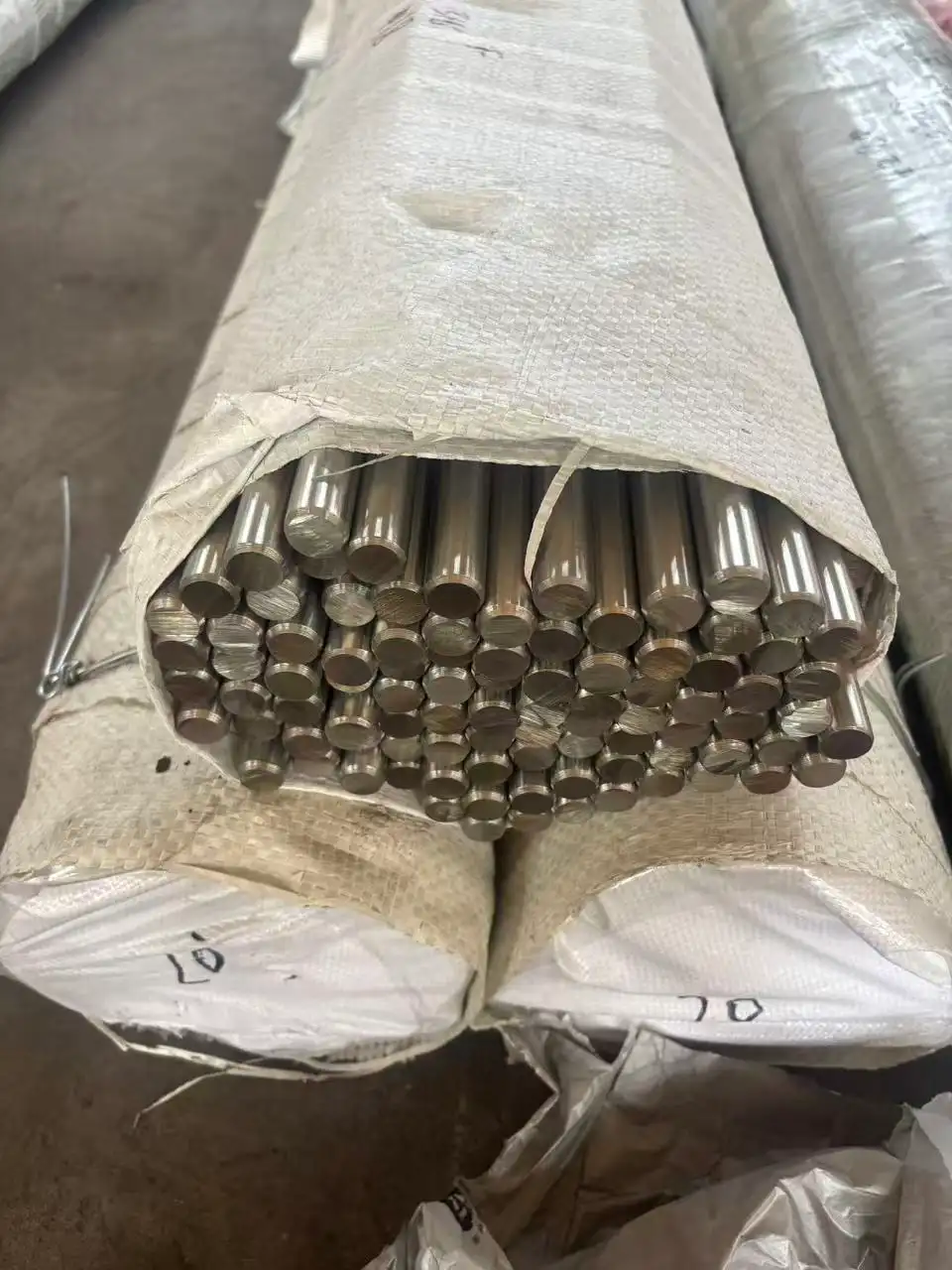
But bar stock is often processed before shipment. It may be cold drawn, straightened, polished, centerless ground, bent or machined. These processes add cold work. Cold work can change a small part of the structure and create strain-induced martensite.
That small structural change can make the bar respond to a magnet.
This is why a cold drawn 304 round bar may feel more magnetic than an annealed 304 plate. It can still be 304. The next step is document and chemistry review.
Magnetic Response: 304 vs 316 vs 303 vs 410 vs 430
The table below is a practical buyer guide. It is not a replacement for material testing.
| Grade | Structure Family | Typical Magnet Response | Common Bar Use | Buyer Check |
|---|---|---|---|---|
| 304 / SUS304 | Austenitic | Usually weak or near non-magnetic, but cold work can add weak response | general shafts, pins, food equipment parts, fabrication stock | check MTC, heat number, chemistry and process condition |
| 316 / 316L | Austenitic with Mo | Usually weak or near non-magnetic, can still respond after cold work | marine, chemical, valve and chloride-sensitive parts | do not use magnet to replace 316L chemistry check |
| 303 | Free-machining austenitic | Can show weak response after cold work | CNC turning, screw-machine parts, fittings | check sulfur and grade wording on MTC |
| 410 | Martensitic | Usually magnetic | shafts, valve parts, wear-related parts | not a substitute for 304 corrosion behavior |
| 430 | Ferritic | Usually magnetic | trim, appliance parts, magnetic applications | lower nickel route, different corrosion profile |
A magnet test can separate some obvious cases, but it cannot prove all grade questions. A weak pull on 304 is not enough to reject the material by itself.
Buyer Example: Magnet Test in a Vietnam CNC Workshop
A CNC workshop in Ho Chi Minh City buys cold drawn 304 round bar for pins and small turned parts. During receiving inspection, the operator uses a magnet and finds weak attraction on several bars.
A fast rejection would be risky. The buyer should first ask three questions:
- Does the MTC show 304 / SUS304 and the correct heat number?
- Do the bundle labels and packing list match that heat number?
- Was the material cold drawn, straightened or ground before shipment?
If those checks line up, weak magnetism may come from cold work. If the documents do not line up, then the buyer has a real reason to pause and ask for more verification.
For Thailand CNC buyers, the same logic applies. Magnet response can help start the inspection, but it should not replace certificate review.
How to Verify the Material Before Rejecting a Batch
Use a layered check. Start simple, then go deeper if the order value or project risk is high.
| Check Step | What to Review | Why It Matters |
|---|---|---|
| Magnet test | weak, strong or no visible attraction | useful as a quick field signal, not final proof |
| MTC review | grade wording, heat number, chemistry, standard | confirms the document route for the batch |
| Heat number match | MTC, label, bundle mark and packing list | connects paper to the actual bars |
| Chemistry check | Cr, Ni and other grade elements | helps confirm 304 family chemistry |
| Process condition | cold drawn, annealed, ground, polished | explains why weak magnetism may appear |
| PMI test if needed | portable alloy verification | useful when the project or buyer requires stronger proof |
If you are not sure how to read the certificate, start with our stainless steel MTC guide. For cold drawn bar orders, also review our h9 vs h10 vs h11 tolerance guide.
What a Magnet Test Can and Cannot Tell You
A magnet test is fast. That is why buyers use it in warehouses.
It can help find obvious mix-ups. For example, a strongly magnetic bar may need extra review if the order was for 304. It can also help workers notice possible grade or batch separation issues.
But it has limits.
A magnet test cannot show carbon content. It cannot prove nickel content. It cannot confirm sulfur content in 303. It cannot replace MTC review. It also cannot explain whether a weak pull comes from cold drawing or from the wrong material.
Use it as a trigger for review, not as the full inspection method.
When 316 Is the Better Question
Sometimes a buyer asks whether 304 is magnetic, but the real issue is corrosion risk.
If the bar will be used near salt spray, coastal air, chemical cleaning or chloride exposure, compare 304 with 316 or 316L before ordering. Magnetic behavior does not decide corrosion performance. Molybdenum content, environment and surface condition matter more.
For this decision path, review our 304 vs 316 stainless steel guide for Singapore and Vietnam, or check 316 stainless steel bar for chloride-sensitive applications.
How FX Stainless Steel Handles This Type of Question
When a buyer asks whether SUS304 magnetic or not should affect acceptance, we do not answer with one word. We first check the buying context.
A practical review usually includes:
- grade wording: 304, 304L, SUS304, AISI 304 or UNS S30400
- bar shape: round, hex, square, flat, peeled or ground bar
- process condition: hot rolled, cold drawn, polished or centerless ground
- MTC and heat number match
- chemical composition shown on the certificate
- whether PMI testing is required by the buyer
- destination and receiving inspection requirement
This keeps the answer useful. A magnet is a tool. It is not the whole quality system.
Buyer Checklist Before Shipment
Before accepting or rejecting 304 bar because of magnet response, use this checklist.
| Question | Buyer Action |
|---|---|
| Is the magnet response weak or strong? | Record it, but do not decide from this alone |
| Was the bar cold drawn or ground? | Ask the supplier to confirm process condition |
| Does the MTC show 304 or SUS304? | Check grade wording and chemistry |
| Does the heat number match the labels? | Compare MTC, bundle mark and packing list |
| Is the project corrosion-sensitive? | Consider whether 316 or 316L is more suitable |
| Is the order high risk? | Request PMI or third-party inspection if needed |
Conclusion
304 stainless steel bar is not guaranteed to be completely non-magnetic. In annealed condition, it is usually weakly magnetic or nearly non-magnetic. After cold drawing, bending, straightening or machining, it can show weak magnetism.
That weak response does not automatically mean fake material.
For buyers, the safer path is simple: use the magnet as an early check, then confirm the MTC, heat number, chemistry and process condition before making a final decision.
Frequently Asked Questions (FAQ)
Q. Is 304 stainless steel bar magnetic?
A. 304 stainless steel bar is usually weakly magnetic or nearly non-magnetic in annealed condition, but cold drawing, bending or machining can create a weak magnetic response. That does not automatically mean the material is fake.
Q. Why does cold drawn 304 stainless steel become magnetic?
A. Cold drawing can change part of the austenitic structure and create a small amount of strain-induced martensite. This can make a 304 bar react weakly to a magnet.
Q. Is 316 stainless steel less magnetic than 304?
A. 316 and 316L are also austenitic stainless steels and are usually weakly magnetic or nearly non-magnetic in annealed condition. They can still show some magnetic response after cold work, so buyers should verify the grade by MTC or PMI when required.
Q. Can a magnet test prove 304 stainless steel is fake?
A. No. A magnet test is only a quick field check. It cannot replace MTC review, heat number matching, chemical composition check or PMI testing when the order requires higher confidence.
Q. What should buyers check if SUS304 bar has weak magnetism?
A. Check the MTC, heat number, grade wording, chemical composition, bar condition and whether the material was cold drawn, bent or machined. If the project is sensitive, ask for PMI testing or mill-side confirmation.
CTA
Send grade, shape, size, finish, tolerance, quantity and destination to FX Stainless Steel. We can help review whether 304 stainless steel bar, 304 stainless steel round bar or 316 stainless steel bar fits your order, with MTC and heat-number consistency review before shipment.