316L Stainless Steel for Marine Use: When 304 Is Not Enough
For coastal, marine and chloride-exposed projects, 316L is not always required, but it is often the safer choice once 304 starts to become a maintenance risk.
In This Guide
Introduction
Buyers usually ask about 316L stainless steel after one of two things has happened: a project is close to the sea, or 304 has already started to look risky on paper. The real question is not whether 316L is "better" in general. The useful question is whether the service conditions have crossed the point where 304 stainless steel is no longer the safer commercial choice.
For marine, coastal and other high-corrosion work, 316L stainless steel is often worth reviewing once salt spray, chloride-bearing water, welded fabrication or hard-to-maintain outdoor service enters the picture. For dry indoor use, 304 may still be perfectly reasonable.
Quick Answer
Choose 316L stainless steel when the project faces:
- salt spray or regular coastal exposure
- chloride-bearing water or process media
- welded fabrication where corrosion around the weld matters
- difficult maintenance access
- a long expected service life
If the part is indoors, away from chlorides and easy to replace, 304 stainless steel may still be enough.
Why 316L Handles Chlorides Better
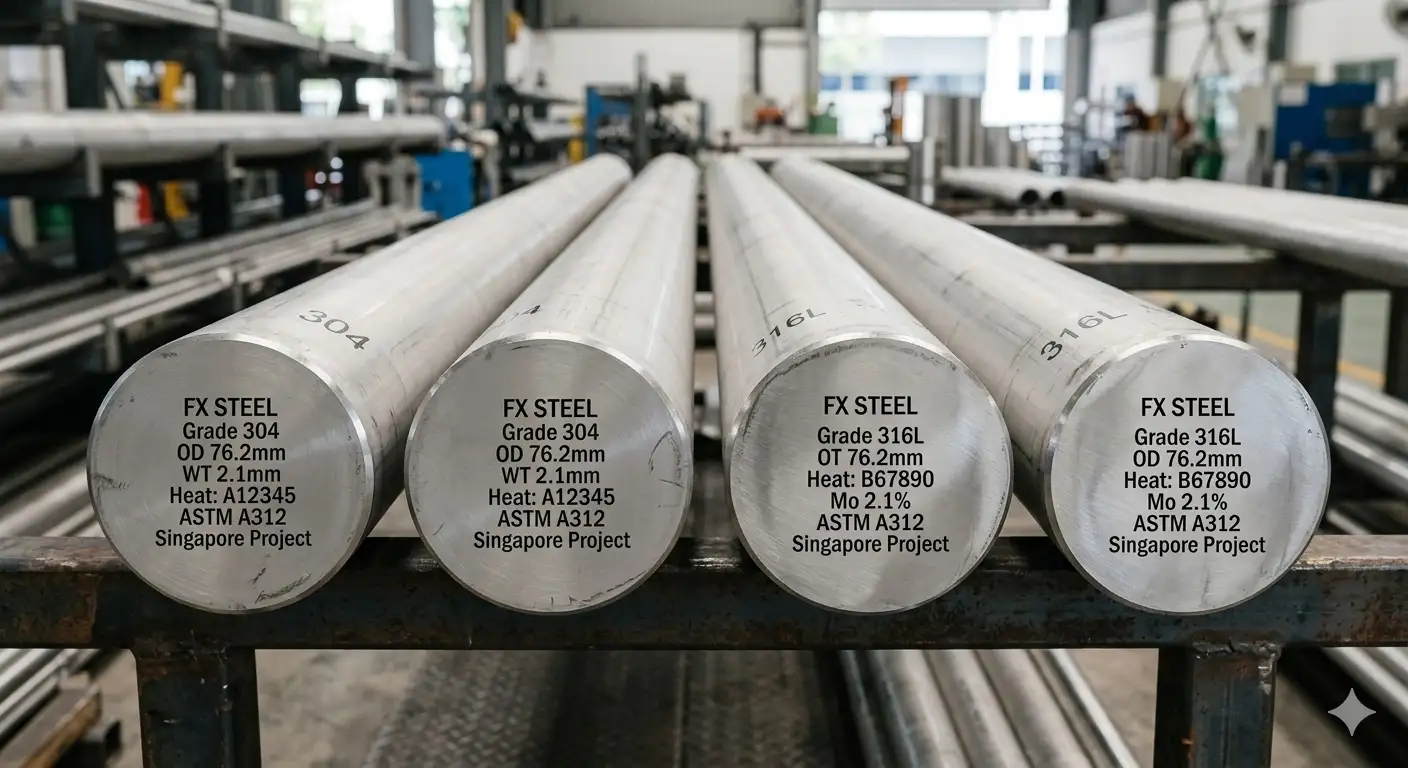
The main technical difference is Molybdenum (Mo). 316L contains molybdenum, while 304 does not. That extra element improves resistance to chloride pitting, the small but deep corrosion damage that often appears in salt-rich service.
The L means low carbon. This matters for welded parts. Lower carbon helps reduce the risk of corrosion around the heat-affected zone after welding, which is why 316L is commonly specified for tanks, pipe systems and fabricated equipment.
Still, 316L is not magic. Poor surface condition, crevices, trapped water and weak cleaning practice can still cause corrosion. Material grade is only one part of the decision.
When 304 Usually Stops Being the Safer Choice
| Project Signal | What It Usually Means |
|---|---|
| Repeated salt spray | 304 becomes harder to defend for long outdoor life |
| Chloride-bearing water | 316L usually gives a safer corrosion margin |
| Welded fabrication in corrosive service | Low-carbon 316L is easier to justify |
| Difficult maintenance access | Higher upfront cost may reduce later risk |
| Long service-life expectation | 316L often gives the project a better lifecycle margin |
This is the real upgrade question. Buyers are not simply choosing a more expensive grade. They are deciding whether the service environment has made 304 the weaker path.
Application Scenarios in Singapore, Vietnam and Thailand
In Singapore, high humidity and salt-laden air make 316L a common choice for coastal railings, outdoor brackets, facade parts and marine hardware. 304 can still be used indoors, but it becomes a weaker option when the part sits outside for years.
In coastal areas of Vietnam, such as Da Nang or port-side industrial zones near Ho Chi Minh City, 316L is often preferred for process piping, washdown equipment and exposed fittings. The more chloride and cleaning chemicals involved, the stronger the case becomes.
In Thailand, inland factories may still use 304 for general equipment and indoor structures. For coastal projects, seafood processing, chemical lines or parts exposed to regular cleaning, 316L usually deserves a closer look.
Common 316L Applications
Buyers often specify 316L for:
| Application | Why 316L Is Used |
|---|---|
| Marine fittings and deck hardware | Better resistance to salt spray and chloride exposure |
| Coastal railings, brackets and facade parts | Longer outdoor life in humid, salt-laden air |
| Chemical pipelines and tanks | Better fit for chloride-bearing media and washdown conditions |
| Food and pharmaceutical equipment | Corrosion resistance plus easier cleaning |
| Heat exchangers and process equipment | Better service margin in demanding fluids |
If the project involves pipe rather than sheet or bar, you can also review our stainless steel pipe supply page.
What Buyers Should Confirm Before Ordering 316L
A clear inquiry is usually faster than a long back-and-forth. Before asking for a quote, confirm:
- Product form: plate, coil, bar, pipe or fabricated part
- Standard: ASTM, EN, JIS or the project-specific requirement
- Size and tolerance: thickness, diameter, OD, wall thickness or cut length
- Surface finish: 2B, No.4, polished, pickled or another required finish
- Welding requirement: yes or no, and whether post-weld corrosion performance matters
- Documents: MTC, heat number traceability and any third-party inspection requirement
- Packing and shipment: export packing, labeling, batch split and destination port
If you are already checking documents before release, this MTC verification guide is the next article to read.
How Buyers Can Verify 316L Before Shipment
For a real 316L order, do not rely only on the grade line in the quotation. Ask for the MTC, check that the chemistry shows Molybdenum (Mo), and match the heat number with the material label or packing record. When the project is sensitive, an XRF or spectrometer check can also be reviewed before shipment.
This step matters because the cost gap between 304 and 316L is large enough that a wrong-grade shipment can become an expensive dispute later.
If you are still at the broader comparison stage, start with our guide on 304 vs 316 stainless steel for coastal projects.
Conclusion
If the project is dry, indoor and low-risk, 304 may still be the right commercial answer. Once the material will face salt spray, chloride-bearing water, welded fabrication or hard-to-maintain outdoor service, 316L stainless steel usually becomes easier to justify.
In other words, do not buy 316L just because it sounds safer. Buy it when the service environment makes 304 the weaker choice.
Frequently Asked Questions (FAQ)
Q. Is 316L stainless steel always better than 304 near the sea?
A. Not always. For indoor or lightly exposed parts, 304 may still be enough. 316L becomes more valuable when the part faces salt spray, chloride-rich water, frequent washdown or a long outdoor service life.
Q. Why is 316L used for marine applications?
A. 316L contains molybdenum, which improves resistance to chloride pitting. Its low carbon content also makes it safer for welded parts because it reduces the risk of corrosion around the weld area.
Q. What should buyers check before ordering 316L stainless steel?
A. Confirm the product form, size, standard, surface finish, welding requirement, MTC, heat number traceability, packing method and actual exposure environment before release.
Q. Can 316L still corrode in marine service?
A. Yes. 316L is more resistant than 304, but it is not immune to corrosion. Poor surface condition, stagnant seawater, crevices and incorrect maintenance can still cause problems.
CTA
If you are comparing grades for a marine, coastal or chemical project, send FX Stainless Steel your application, product form, size, quantity, surface requirement and destination port. We can help you review whether 304, 316 or 316L is the better fit before quotation.